
Septic tank pumping in Auburn
Schedule a septic tank pump-out in Auburn when the tank is full, slow drains are appearing, or routine maintenance is due.
By SepticNearby Editorial Team · Updated 2025-09-29
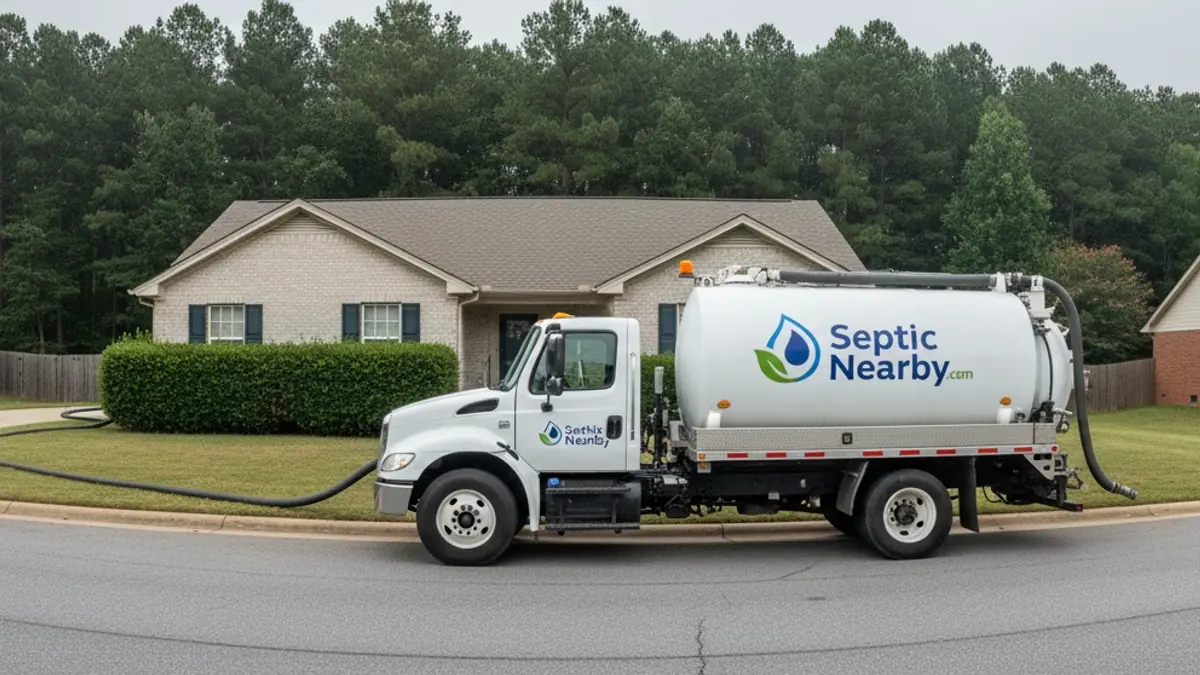 Photo Illustrative
Operators available 7 AM - 9 PM
Licensed & Insured • No Obligation • Emergency Service Available
Online request
Prefer not to call? Send the details and we will review the request before looking for available septic providers near your ZIP code.
Planning range for Georgia homeowners. Actual quotes vary by provider, route distance, tank size, lid access, disposal fees, and urgency. Ask whether the quote includes disposal, both compartments when present, and any digging.
Homeowners in Auburn often search for septic pumping, emergency pump-out, tank cleaning, septic repair, and inspection help. The right provider depends on whether this is routine maintenance, a backup, a full tank, or a problem that needs diagnosis before pumping.
Schedule a septic tank pump-out in Auburn when the tank is full, slow drains are appearing, or routine maintenance is due.
If sewage is backing up or wastewater is surfacing, request urgent septic help and tell the provider whether the issue is inside the home or near the tank/drain field.
Ask whether the quoted price includes pumping, disposal, basic tank access, and whether digging or locating the lid costs extra.
If you are not sure pumping is the right fix, ask for an inspection or diagnostic visit before approving repair work.
Our local teams provide septic tank pumping and maintenance services throughout the Auburn area, including the following ZIP codes:
Managing your onsite sewage management system in Auburn, GA, is a matter of both household efficiency and environmental stewardship. Within Barrow County, residential and commercial properties rely on these systems to process their wastewater, a critical function that demands proper oversight. The performance of your septic system is directly tied to our local geography—specifically, the Cecil series soils common here. These red clay loams, while excellent for agriculture, can have moderate to slow permeability, placing significant stress on drainfields if the system is not meticulously maintained.
Your household's waste stream—every flush, shower, and load of laundry—contributes to the influent entering your tank. Inside, solids settle to form sludge while lighter materials like grease form a scum layer. The natural bacterial action breaks down some solids, but the accumulation is inevitable. A failure to properly manage this sludge results in system backups, drainfield saturation, and potential groundwater contamination, a serious concern regulated by the Barrow Board of Health.
In older neighborhoods and rural properties around the 30011 ZIP code, system access can be a significant logistical challenge. Overgrown landscaping, sheds built over tanks, or long, narrow driveways complicate the pumping process and can increase your disposal cost. Newer subdivisions may have better-planned access, but often feature smaller lot sizes that require careful maneuvering of service vehicles to protect landscaping and the drainfield itself.
Seasonal factors in our humid subtropical climate also dictate maintenance strategy. Heavy spring and summer thunderstorms can saturate the ground, making it difficult for effluent to percolate through the drainfield. This is when a well-maintained, recently pumped tank is most critical. Conversely, prolonged dry spells can harden the clay, potentially causing cracks in the soil around the drainfield pipes.
When you contract a service like Green Septic Clean or 2 Brothers Septic, you are initiating a crucial chain of custody for your household waste. The hauler is responsible for safely extracting the septage, documenting the volume on a disposal manifest, and transporting it to a state-approved treatment facility. This manifest is your record of compliance, proving responsible disposal. Optimizing this process begins with understanding your system's capacity, your household's usage patterns, and scheduling service before minor issues become costly emergencies. Proper management isn't just about avoiding backups; it's about protecting your property investment and our shared local environment.
Homeowner guides
Planning service? Buying a Georgia home with septic? Start with this inspection checklist, Check signs your septic tank may be full, what to do if septic backs up, how heavy rain affects septic systems, compare Georgia septic pumping cost factors, review septic tank pumping schedules, or run the full septic maintenance checklist.
For a typical household in Auburn, the recommended interval is every 3 to 5 years. However, this can shift. A large family in a three-bedroom house may need pumping every 2 to 3 years. The use of a garbage disposal increases solid waste and necessitates more frequent service. The dense clay loam soils in our area also mean that an overfilled tank can quickly lead to a saturated, failing drainfield, so adhering to a conservative schedule is wise.
The primary factors are the tank's size (e.g., 1,000 vs. 1,500 gallons) and the accessibility of the lids. If the lids are buried, expect an additional charge for locating and digging them up. Travel distance to your property, especially for homes in more rural parts of Barrow County, can also influence the price. Emergency or after-hours service will always carry a premium.
For routine pumping, no permit is necessary. However, for any repair, alteration, or replacement of the tank, lines, or drainfield, you absolutely must obtain a permit from the Barrow Board of Health. This ensures the work meets local health and environmental codes and is properly inspected.
Yes, and it's a necessary precaution. Our humid climate brings significant rainfall, which saturates the ground. Driving a heavy pumper truck over a wet lawn can cause deep ruts and potentially damage the drainfield pipes just below the surface. Reputable companies will proactively reschedule to protect your property.
To ensure an efficient and safe service call, please clear a path for the truck to the septic tank area. Unlock any gates. If you know the location of your tank's lids, clearing any grass or debris from them is helpful. For everyone's safety, please secure any pets indoors or in a fenced area away from the work zone.