
Septic tank pumping in Conyers
Schedule a septic tank pump-out in Conyers when the tank is full, slow drains are appearing, or routine maintenance is due.
By SepticNearby Editorial Team · Updated 2025-09-29
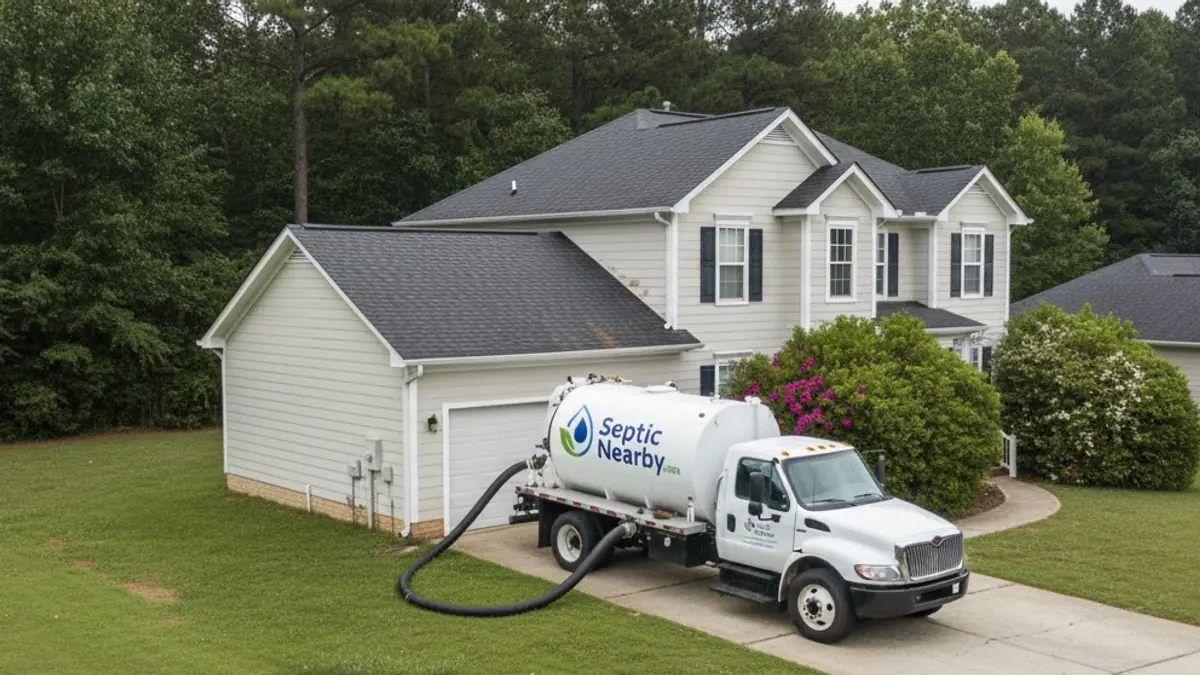 Photo Illustrative
Operators available 7 AM - 9 PM
Licensed & Insured • No Obligation • Emergency Service Available
Online request
Prefer not to call? Send the details and we will review the request before looking for available septic providers near your ZIP code.
Planning range for Georgia homeowners. Actual quotes vary by provider, route distance, tank size, lid access, disposal fees, and urgency. Ask whether the quote includes disposal, both compartments when present, and any digging.
Homeowners in Conyers often search for septic pumping, emergency pump-out, tank cleaning, septic repair, and inspection help. The right provider depends on whether this is routine maintenance, a backup, a full tank, or a problem that needs diagnosis before pumping.
Schedule a septic tank pump-out in Conyers when the tank is full, slow drains are appearing, or routine maintenance is due.
If sewage is backing up or wastewater is surfacing, request urgent septic help and tell the provider whether the issue is inside the home or near the tank/drain field.
Ask whether the quoted price includes pumping, disposal, basic tank access, and whether digging or locating the lid costs extra.
If you are not sure pumping is the right fix, ask for an inspection or diagnostic visit before approving repair work.
Our local teams provide septic tank pumping and maintenance services throughout the Conyers area, including the following ZIP codes:
Navigating the requirements for on-site sewage management systems (septic systems) in Conyers, GA, is a procedural matter overseen by the Rockdale County Board of Health. This guide outlines the necessary steps for homeowners and builders to ensure compliance with local and state environmental health codes. Whether you are planning new construction in the developing areas of the 30094 ZIP code or repairing a failing system in an established neighborhood within 30012 or 30013, a formal permit application and review process is mandatory.
Properties in our region are characterized by a humid subtropical climate and dominant soil profiles like Cecil sandy loam and clay loam. These factors significantly influence septic system design and performance. The dense clay substrate common throughout Rockdale County has a slow percolation rate, which often necessitates larger, more complex drain fields to ensure proper effluent treatment. Heavy seasonal rainfall can lead to soil saturation, further challenging system drainage and underscoring the importance of a correctly engineered site plan. Your permit application must demonstrate a design that accounts for these specific local conditions.
Initiating a project requires the submission of a complete permit application package to the Environmental Health office. The process is the same for both new installations and major repairs, such as drain field or tank replacement. Routine maintenance, like tank pumping, does not require a permit.
The first step is to engage a state-certified professional—either a soil scientist (for the soil analysis) or a septic system installer (for design and installation). Reputable local firms, such as Bowen's Septic Tank or Arnold's Septic Tank Service, are familiar with Rockdale County's specific submission requirements and soil characteristics, which can prevent costly delays during the plan review stage. They will perform a Level 3 or Level 4 soil survey to determine the site's suitability.
This soil report is the foundational document for your application. It details soil composition, depth to bedrock, and the seasonal water table. Based on these findings, a system design is created that meets state code. The site plan, drawn to scale, must be submitted with the application. It must clearly delineate property lines, the proposed house footprint, driveways, any wells (on your property or adjacent properties), and the precise location and dimensions of the proposed tank and absorption field. Setbacks from all structures and water sources are non-negotiable.
Once the application package and all required documents are filed, the plan review period begins. Our office typically processes complete applications within 10 to 15 business days. Incomplete or inaccurate submissions will be returned, resetting the timeline. There is a non-negotiable filing deadline for any project tied to a construction schedule; coordinate with your builder to ensure timely submission.
A complete application package must include the following items for consideration:
Upon approval of the site plan and system design, a permit is issued, and work may commence. The permit is valid for a period of 12 months. It is the responsibility of the permit holder or their certified installer to schedule all required inspections.
The inspection schedule is a critical phase of the process. A pre-cover inspection is mandatory after the tank and drain field lines are installed but before any part of the system is buried. An inspector from our office will verify that the installation matches the approved plan exactly. Any deviations will result in a failed inspection and a work stoppage order until corrected. Covering any component of the system before it has been inspected and approved will result in significant penalties and may require the entire system to be uncovered at the owner's expense.
For new construction, the final approval of the septic system is a prerequisite for the issuance of the home's Certificate of Occupancy. No exceptions are made. Adhering to the established procedure, meeting all deadlines, and passing the inspection schedule ensures the long-term viability of your system and protects the environmental health of our community.
Homeowner guides
Planning service? Buying a Georgia home with septic? Start with this inspection checklist, Check signs your septic tank may be full, what to do if septic backs up, how heavy rain affects septic systems, compare Georgia septic pumping cost factors, review septic tank pumping schedules, or run the full septic maintenance checklist.
The general recommendation is every 3 to 5 years. However, in Rockdale County, this can change. A larger household (4+ people) with a standard 1,000-gallon tank should pump every 3 years. The dense clay loam soil prevalent here is less forgiving of overloaded drain fields, so preventative pumping is crucial to avoid costly field line repairs.
Several factors determine the final price. The primary driver is tank size (e.g., 1,000 vs. 1,500 gallons). Other variables include the accessibility of the tank lids; if significant digging is required, the cost will increase. The distance the service truck must travel to your property and emergency or after-hours service requests also affect the price.
For routine maintenance like pumping your tank, no permit is required. However, for any repair, alteration, or replacement of the system—including replacing the tank or repairing the drain field—you must obtain a permit from the Rockdale County Board of Health before work begins.
Yes, absolutely. Conyers' humid subtropical climate brings intense rainfall, especially in spring and summer. This saturates the ground, making it difficult for heavy pumper trucks to access the tank without damaging your lawn or the leach field itself. Service may be rescheduled until the ground is firm enough to support the equipment safely.
To ensure an efficient service call, please clear the path to the septic tank. This includes moving any vehicles from the driveway, unlocking gates, and removing any items covering the tank lids. If you know where your lids are, uncovering them can save time and labor costs. For everyone's safety, please secure any pets indoors.