
Septic tank pumping in Danielsville
Schedule a septic tank pump-out in Danielsville when the tank is full, slow drains are appearing, or routine maintenance is due.
By SepticNearby Editorial Team · Updated 2025-09-30
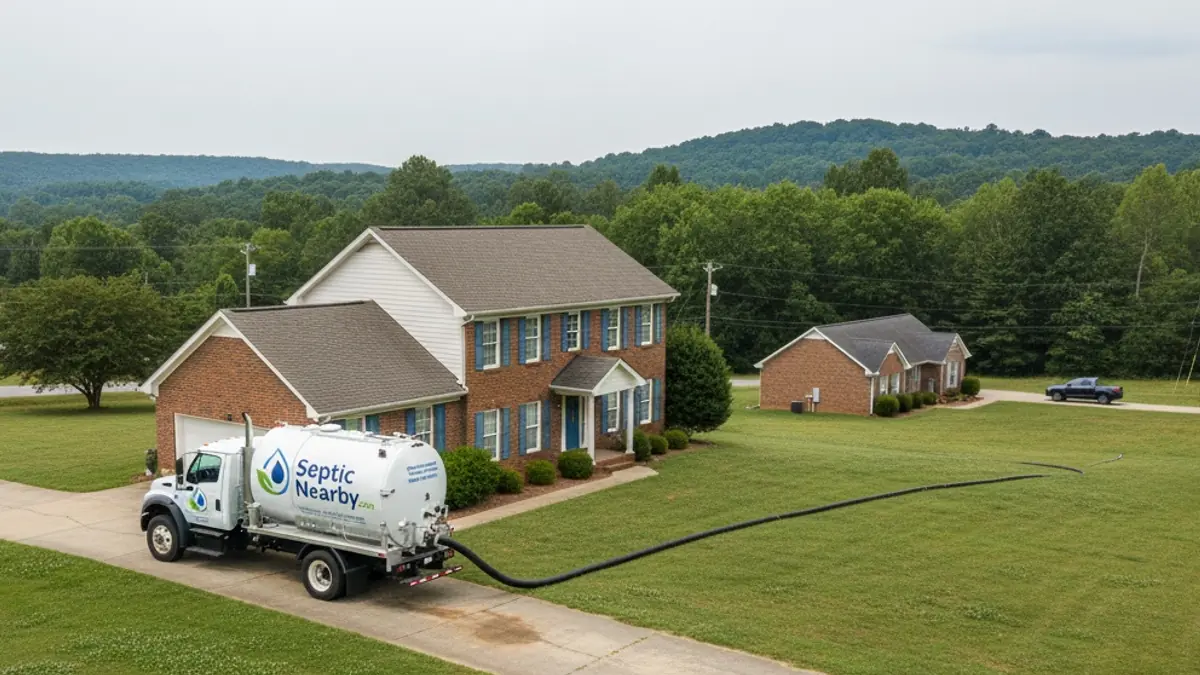 Photo Illustrative
Operators available 7 AM - 9 PM
Licensed & Insured • No Obligation • Emergency Service Available
Online request
Prefer not to call? Send the details and we will review the request before looking for available septic providers near your ZIP code.
Planning range for Georgia homeowners. Actual quotes vary by provider, route distance, tank size, lid access, disposal fees, and urgency. Ask whether the quote includes disposal, both compartments when present, and any digging.
Homeowners in Danielsville often search for septic pumping, emergency pump-out, tank cleaning, septic repair, and inspection help. The right provider depends on whether this is routine maintenance, a backup, a full tank, or a problem that needs diagnosis before pumping.
Schedule a septic tank pump-out in Danielsville when the tank is full, slow drains are appearing, or routine maintenance is due.
If sewage is backing up or wastewater is surfacing, request urgent septic help and tell the provider whether the issue is inside the home or near the tank/drain field.
Ask whether the quoted price includes pumping, disposal, basic tank access, and whether digging or locating the lid costs extra.
If you are not sure pumping is the right fix, ask for an inspection or diagnostic visit before approving repair work.
Our local teams provide septic tank pumping and maintenance services throughout the Danielsville area, including the following ZIP codes:
For homeowners in Danielsville, GA, managing a private onsite sewage management system is a matter of strict operational protocol, not guesswork. The performance of your septic system is directly tied to local environmental factors, including Madison County’s characteristic Cecil sandy loam and clay loam subsoils. These soils, combined with our humid subtropical climate, dictate a rigorous maintenance schedule and a low tolerance for non-conformance. This document serves as a quality control (QC) checklist for ensuring your system meets all acceptance criteria and avoids costly corrective actions.
A functional septic system in the 30633 area is not merely one that is “not failing.” The quality standard is a system that operates efficiently, protects groundwater, and poses no risk to public health. The primary inspection criterion for routine maintenance is the sludge and scum layer thickness inside the tank. The established standard mandates pumping when the bottom of the scum layer is within 6 inches of the outlet baffle or the top of the sludge layer is within 12 inches of the outlet baffle. Allowing solids to exceed these thresholds constitutes a defect that can lead to catastrophic drainfield failure, a particularly difficult issue in heavy clay soils which percolate slowly.
Acceptance criteria for a pumping service extend beyond simply emptying the tank. A thorough service, whether from a known local provider like Price's Septic Tank Service or another qualified technician, includes a basic visual inspection of the tank's interior, baffles, and lid. The technician should document any visible cracks, root intrusion, or baffle deterioration. This initial defect identification is critical; a missing or damaged baffle is a severe non-conformance that allows solids to escape into the drainfield, leading to premature system failure. Upon completion, the homeowner should expect a clear sign-off, confirming the tank was fully pumped and noting any observed deficiencies requiring further action.
Madison County’s variable terrain, from rolling hills to flatter pastureland, presents unique challenges. Older homes may have undersized or difficult-to-locate systems, complicating service. Common defects identified during routine inspections in Danielsville include:
Identifying a defect initiates a corrective action plan. A clogged filter requires cleaning, a simple but essential task. A cracked lid necessitates immediate replacement to prevent accidents and infiltration. More severe issues, such as a saturated drainfield or damaged baffles, require a formal repair process, which must be permitted and inspected by the Madison Board of Health. Proactive maintenance, documented through regular service reports, is the only reliable method to avoid these costly, disruptive scenarios. Consider your septic system not as a passive utility, but as a piece of critical infrastructure demanding documented, periodic quality assurance checks.
Homeowner guides
Planning service? Buying a Georgia home with septic? Start with this inspection checklist, Check signs your septic tank may be full, what to do if septic backs up, how heavy rain affects septic systems, compare Georgia septic pumping cost factors, review septic tank pumping schedules, or run the full septic maintenance checklist.
The general recommendation is every 3 to 5 years. However, Madison County's clay-rich soils can impact drainfield absorption. A smaller tank, a larger household, or heavy use of a garbage disposal will necessitate a more frequent schedule, possibly every 2 to 3 years, to prevent solids from overwhelming the system.
The primary factors are tank size (e.g., 1000 vs. 1500 gallons) and the depth of the tank lids. If extensive digging is required to uncover the lids, the cost will increase. Travel distance to more remote parts of the county and requests for service outside of normal business hours will also affect the final price.
Routine pumping does not require a permit. However, any repair, modification, or full system replacement absolutely requires a permit from the Madison Board of Health. Unpermitted work is illegal and can create significant problems when selling your property.
Yes. Georgia's heavy rainfalls can saturate the ground, making it impossible for a heavy septic truck to drive over your lawn or near the drainfield without causing severe ruts and potentially damaging the system's pipes. Technicians will reschedule if access is deemed unsafe for your property.
Clear a path to the septic tank area, ensuring the truck has ample room to maneuver. Unlock any gates. If you know the location of your tank's access lids, clearing grass or mulch off them can save time and labor costs. Keep all pets and children safely inside and away from the work area.