
Septic tank pumping in Douglasville
Schedule a septic tank pump-out in Douglasville when the tank is full, slow drains are appearing, or routine maintenance is due.
By SepticNearby Editorial Team · Updated 2025-10-26
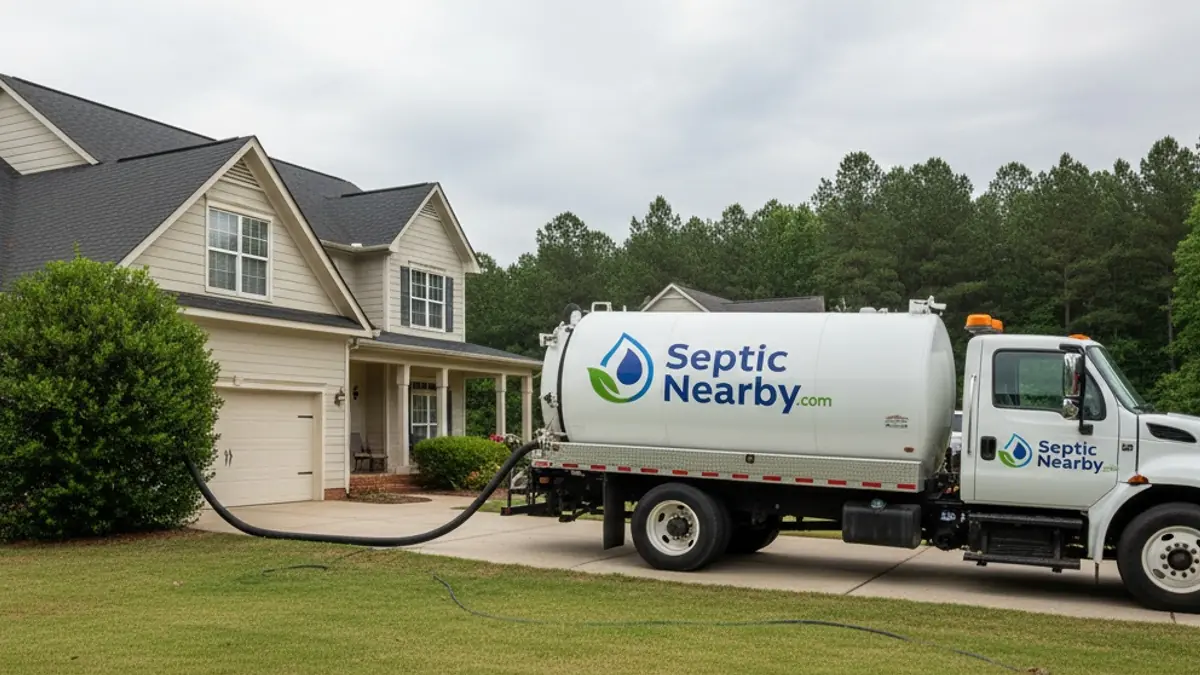 Photo Illustrative
Operators available 7 AM - 9 PM
Licensed & Insured • No Obligation • Emergency Service Available
Online request
Prefer not to call? Send the details and we will review the request before looking for available septic providers near your ZIP code.
Planning range for Georgia homeowners. Actual quotes vary by provider, route distance, tank size, lid access, disposal fees, and urgency. Ask whether the quote includes disposal, both compartments when present, and any digging.
Homeowners in Douglasville often search for septic pumping, emergency pump-out, tank cleaning, septic repair, and inspection help. The right provider depends on whether this is routine maintenance, a backup, a full tank, or a problem that needs diagnosis before pumping.
Schedule a septic tank pump-out in Douglasville when the tank is full, slow drains are appearing, or routine maintenance is due.
If sewage is backing up or wastewater is surfacing, request urgent septic help and tell the provider whether the issue is inside the home or near the tank/drain field.
Ask whether the quoted price includes pumping, disposal, basic tank access, and whether digging or locating the lid costs extra.
If you are not sure pumping is the right fix, ask for an inspection or diagnostic visit before approving repair work.
Our local teams provide septic tank pumping and maintenance services throughout the Douglasville area, including the following ZIP codes:
Coordinating septic service in Douglasville, GA requires a clear understanding of the local landscape, from the soil underfoot to the layout of our neighborhoods. From our dispatch desk, we build daily routes that account for the unique challenges of Douglas County, ensuring our trucks arrive within their designated window and can operate safely and efficiently.
Our service area covers the entire region, from the dense residential grids inside the 30134 ZIP code to the more sprawling properties with long driveways out in the 30135 area toward Mirror Lake. The primary operational challenge here is the Georgia red clay. It's a heavy, dense soil—a mix of clay loam that doesn't drain quickly. This is compounded by our humid subtropical climate, which delivers intense summer thunderstorms that can saturate the ground for days. When that clay gets waterlogged, it puts immense pressure on your drain field and can turn a routine pumping job into a critical recovery mission. A system that functions perfectly in dry weather can show signs of failure overnight after a heavy rain.
Before we can even dispatch a truck, we have to confirm logistics. The first question is always access. Our pumper trucks are heavy-duty vehicles that weigh over 30,000 pounds when empty and far more when loaded. They require a stable, relatively flat surface with adequate parking clearance—at least 12 feet of width and clear of low-hanging oak branches or power lines. We need to know about narrow driveways, tight turns, and any recent landscaping that might obstruct the path to your tank. For homes in gated communities or off private roads, securing gate access codes ahead of time is non-negotiable; it prevents a failed service call and keeps our entire daily route on schedule.
Douglasville’s diverse housing stock presents another layer of complexity. We service original mid-century homes near the historic downtown, many with older, smaller-capacity tanks that demand more frequent attention. In contrast, newer subdivisions feature modern systems designed for higher flow, but they are often situated on lots with less-than-ideal topography, requiring careful truck placement to avoid damaging manicured lawns or irrigation systems. Each property type requires a specific logistical approach.
We operate on a time window system, typically providing a 2 or 4-hour arrival slot. This allows our drivers to safely navigate I-20 and Highway 5 traffic and manage any unexpected delays at a prior job site, such as a difficult-to-locate tank lid or an exceptionally full system. An organized schedule, where homeowners have prepared for our arrival, is what allows professional outfits to operate efficiently across the county. Your preparation is the first step in a successful service call. Knowing the general location of your tank lids, clearing the area of toys or patio furniture, and securing pets inside saves valuable time. It ensures our technicians can get straight to work, complete the job within the planned window, and move on to the next scheduled stop on the route.
Homeowner guides
Planning service? Buying a Georgia home with septic? Start with this inspection checklist, Check signs your septic tank may be full, what to do if septic backs up, how heavy rain affects septic systems, compare Georgia septic pumping cost factors, review septic tank pumping schedules, or run the full septic maintenance checklist.
The general recommendation is every 3 to 5 years. However, in Douglas County, local conditions matter. If you have a large household (4+ people), use a garbage disposal, or live on property with dense red clay soil and poor drainage, you should schedule pumping closer to the 3-year mark to prevent solids from migrating into your drain field.
The primary factors are tank size (gallons), the depth of the tank lids (if extensive digging is required), and truck accessibility (if extra hose is needed to reach the tank). The requested time window also plays a role; emergency or after-hours service carries a premium. Travel distance to remote parts of the county can also influence the final cost.
For standard preventative pumping, no permit is necessary. For any work involving repairs to the tank or drain field, or for a new system installation or replacement, a permit from the Douglas Board of Health is absolutely required before work can begin. This ensures the work meets local environmental and safety codes.
Yes. Our humid subtropical climate means heavy downpours can saturate the ground, especially our clay soils. Driving a heavy pumper truck onto a waterlogged lawn risks sinking the vehicle and severely damaging your yard and potentially the drain field itself. Our dispatch monitors weather and may proactively reschedule service to a drier window for safety and to protect your property.
To ensure an efficient service call, please clear the driveway for parking clearance. Unlock any gates and provide access codes if necessary. If you know the location of your septic tank lids, please clear any obstructions like potted plants, firewood, or vehicles. Finally, for their safety and ours, please secure all pets indoors before the technician arrives.