
Septic tank pumping in Lyerly
Schedule a septic tank pump-out in Lyerly when the tank is full, slow drains are appearing, or routine maintenance is due.
By SepticNearby Editorial Team · Updated 2025-10-27
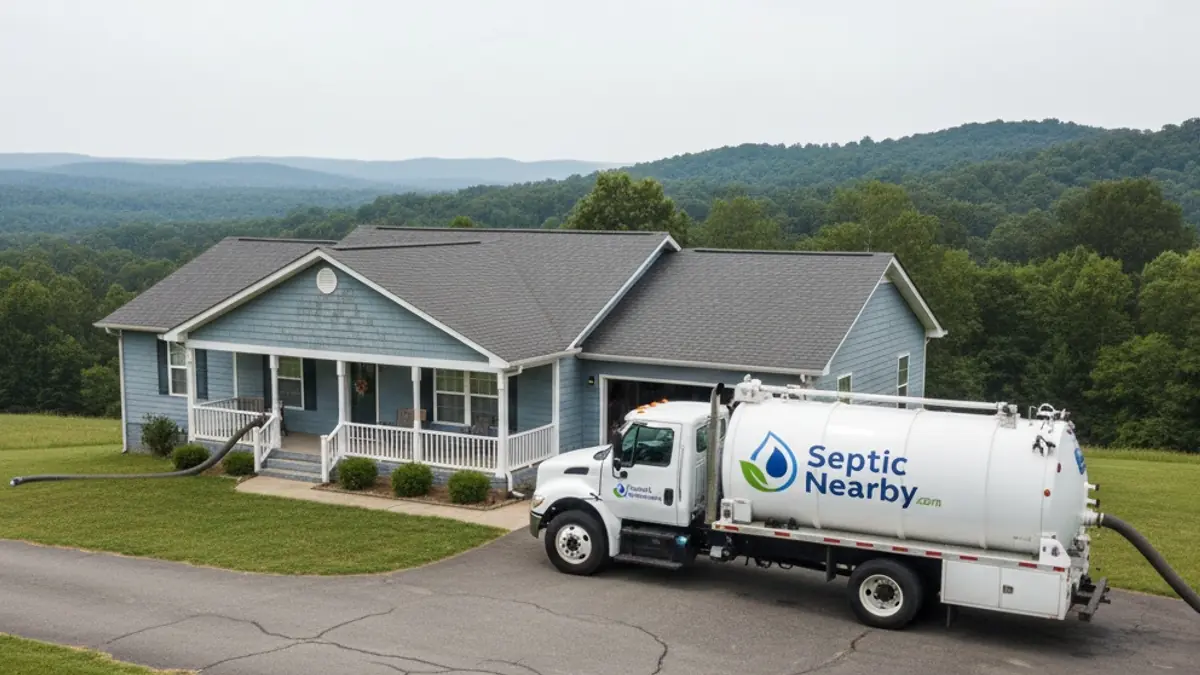 Photo Illustrative
Operators available 7 AM - 9 PM
Licensed & Insured • No Obligation • Emergency Service Available
Online request
Prefer not to call? Send the details and we will review the request before looking for available septic providers near your ZIP code.
Planning range for Georgia homeowners. Actual quotes vary by provider, route distance, tank size, lid access, disposal fees, and urgency. Ask whether the quote includes disposal, both compartments when present, and any digging.
Homeowners in Lyerly often search for septic pumping, emergency pump-out, tank cleaning, septic repair, and inspection help. The right provider depends on whether this is routine maintenance, a backup, a full tank, or a problem that needs diagnosis before pumping.
Schedule a septic tank pump-out in Lyerly when the tank is full, slow drains are appearing, or routine maintenance is due.
If sewage is backing up or wastewater is surfacing, request urgent septic help and tell the provider whether the issue is inside the home or near the tank/drain field.
Ask whether the quoted price includes pumping, disposal, basic tank access, and whether digging or locating the lid costs extra.
If you are not sure pumping is the right fix, ask for an inspection or diagnostic visit before approving repair work.
Our local teams provide septic tank pumping and maintenance services throughout the Lyerly area, including the following ZIP codes:
Living in Lyerly, Georgia, means understanding the unique demands of our local landscape. Most properties here in Chattooga County, particularly outside the immediate town center in the 30730 area, rely on an onsite wastewater treatment system—your septic system. This isn't a set-it-and-forget-it utility. It's a living system that interacts directly with our region's specific environment, from the dense red clay loam underfoot to the challenges of our humid subtropical climate.
Properly managing your system starts with knowing who is in charge. All septic system installation, modification, and major repair work falls under the jurisdiction of the Chattooga County Board of Health. They are the sole authority for issuing a permit, which is non-negotiable for anything beyond a routine tank pump-out. Trying to replace a drain field or install a new tank without their approval is a serious compliance issue that can create massive headaches when you sell your property.
The housing stock around Lyerly is a mix. We have older farmhouses with legacy systems that may not meet modern codes, alongside newer constructions on larger lots. For older systems, the question often becomes repair vs. replace. A simple clogged line is one thing; a failing drain field is another. If your property is small or has difficult topography, replacing a system might require a variance from the Board of Health to accommodate setbacks from wells, property lines, or streams. This is a formal process that requires a detailed site plan and soil evaluation.
Our soil is the biggest variable. The heavy clay content common in Northwest Georgia means water percolates, or drains, more slowly than in sandy regions. During our wet seasons—especially the spring and fall—the ground can become saturated, raising the water table and putting immense pressure on your drain field. A field that works fine in a dry August might show signs of failure after a week of April showers. This is why regular maintenance isn't just a suggestion; it's a necessity to prevent backups and costly emergencies. Companies like I&G Septic Tank Cleaning Service LLC are familiar with the access challenges and soil conditions unique to our area, from navigating narrow country roads to siting their trucks on ground that won’t sink after a downpour. An undersized or poorly maintained system in our clay soil is a recipe for a soggy, foul-smelling yard and a call to the Health Department.
Before you undertake any significant septic work, your first step should be to understand the rules. The process involves a site evaluation, a soil test, and a detailed application. This isn't just paperwork; it’s a safeguard that ensures your system is designed to function correctly with Lyerly's specific environmental conditions, protecting both your investment and our local groundwater.
Homeowner guides
Planning service? Buying a Georgia home with septic? Start with this inspection checklist, Check signs your septic tank may be full, what to do if septic backs up, how heavy rain affects septic systems, compare Georgia septic pumping cost factors, review septic tank pumping schedules, or run the full septic maintenance checklist — and if a quote confuses pumping versus cleaning.
The general recommendation is every 3 to 5 years. However, factors specific to Chattooga County can change this. Larger households, use of a garbage disposal, and the slower percolation of our clay soils may require more frequent pumping, perhaps every 2 to 3 years. Smaller households on a well-drained lot might extend it to 5 years. A technician can measure the scum and sludge layers to give you a precise recommendation.
Several factors determine the final price. These include the size of your tank (e.g., 1000 vs. 1500 gallons), how deep the access lids are buried (requiring more digging), the accessibility of the tank for the service truck, and the travel distance to your property. Emergency or after-hours service will also cost more than a scheduled appointment.
For routine pumping, no permit is needed. For any repair beyond a simple pipe unclogging, or for a full system replacement or new installation, you absolutely need a permit from the Chattooga County Board of Health. This is a legal requirement to ensure the work meets health and environmental codes.
Yes. Heavy rain saturates the ground, making it risky for a heavy truck to drive on your lawn or unpaved driveway. It can also flood the work area around the tank lid. Furthermore, a saturated drain field can cause groundwater to flow back into the septic tank as it's being pumped, preventing a complete pump-out. Most providers will reschedule if conditions are too wet.
Clear a path to the septic tank area for the truck and its hoses. Unlock any gates. If you know where your tank lids are, clearing the grass or soil off them can save time and potential digging fees. Finally, ensure all pets and children are secured indoors to keep them safe from the equipment and open tank.