
Septic tank pumping in Peachtree City
Schedule a septic tank pump-out in Peachtree City when the tank is full, slow drains are appearing, or routine maintenance is due.
By SepticNearby Editorial Team · Updated 2025-09-13
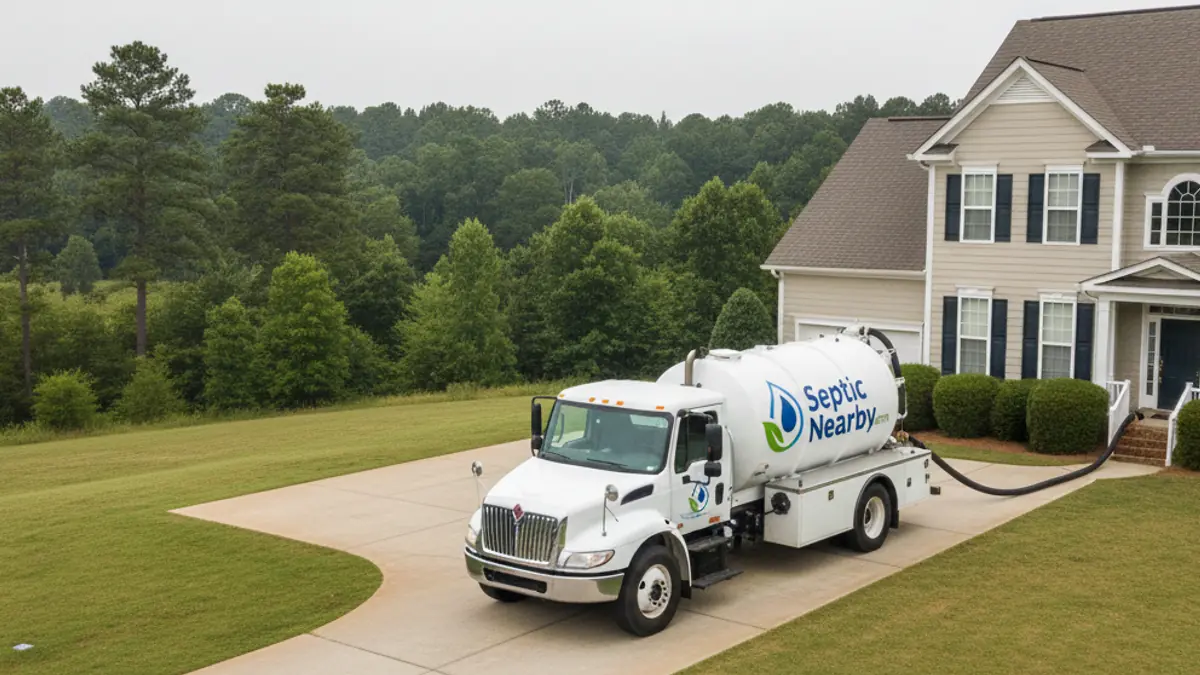 Photo Illustrative
Operators available 7 AM - 9 PM
Licensed & Insured • No Obligation • Emergency Service Available
Online request
Prefer not to call? Send the details and we will review the request before looking for available septic providers near your ZIP code.
Planning range for Georgia homeowners. Actual quotes vary by provider, route distance, tank size, lid access, disposal fees, and urgency. Ask whether the quote includes disposal, both compartments when present, and any digging.
Homeowners in Peachtree City often search for septic pumping, emergency pump-out, tank cleaning, septic repair, and inspection help. The right provider depends on whether this is routine maintenance, a backup, a full tank, or a problem that needs diagnosis before pumping.
Schedule a septic tank pump-out in Peachtree City when the tank is full, slow drains are appearing, or routine maintenance is due.
If sewage is backing up or wastewater is surfacing, request urgent septic help and tell the provider whether the issue is inside the home or near the tank/drain field.
Ask whether the quoted price includes pumping, disposal, basic tank access, and whether digging or locating the lid costs extra.
If you are not sure pumping is the right fix, ask for an inspection or diagnostic visit before approving repair work.
Our local teams provide septic tank pumping and maintenance services throughout the Peachtree City area, including the following ZIP codes:
This guide outlines the procedural requirements for obtaining permits for new septic system installations, modifications, or major repairs within Peachtree City, Georgia. All on-site sewage management is regulated at the county level; therefore, all applications and inquiries must be directed to the Environmental Health Section of the Fayette Board of Health. The City of Peachtree City Planning & Zoning Department confirms compliance with local ordinances, but the technical approval and inspection authority rests with the county.
Fayette County's geology presents unique challenges for septic system design. Much of the area, particularly in developments near the Flat Creek basin or Lake Kedron, consists of heavy Cecil series clay loam. This soil type has slow percolation rates, which significantly influences the size and type of drain field required. In contrast, pockets of sandy loam may be found, but a site-specific soil analysis conducted by a certified soil classifier is a mandatory prerequisite for any permit application. This analysis determines the soil's suitability and dictates the system design, which must adhere to the Georgia Department of Public Health's standards for on-site sewage management.
Site Evaluation & Soil Analysis: The first step is to engage a certified professional to perform a Level 3 or Level 4 soil survey. This report is the foundational document for your application. It details soil composition, depth to bedrock, and the seasonal water table—a critical factor in our humid subtropical climate, where groundwater levels can rise significantly after heavy precipitation.
System Design: Based on the soil report and the number of bedrooms in the dwelling, a state-certified installer or engineer must design a compliant septic system. The design plan must be drawn to scale, showing the proposed location of the tank, drain field, all structures, wells, property lines, and any bodies of water. For properties in areas like the 30269 ZIP code with challenging topography or limited space, an advanced treatment system may be required.
Permit Application Submission: The complete permit application package must be submitted to the Fayette Board of Health. A complete package includes the application form, the soil analysis report, the detailed system design plan, a site plan, and the applicable fee. Incomplete submissions are the leading cause of processing delays. Ensure your chosen contractor, such as a reputable local firm like Firehouse Septic or Marely's Septic Tank Services, provides all necessary licensure information with the packet.
A plan review will not commence until all required documentation is on file. Please assemble the following prior to submission:
Fees for permits are established by the Fayette Board of Health and are subject to change. The fee schedule is typically based on the type of permit (new installation, repair) and system complexity. Payment is due at the time of application submission.
Once a complete application is filed, the typical plan review period is 10-15 business days. This timeline can be extended if the plans require revisions or additional information is requested. After the permit is issued, your contractor can begin work. An inspection schedule must be coordinated with the county health inspector at specific phases of construction—typically before any part of the system is covered. A final inspection is required before the system is placed into service. For new construction, a satisfactory final septic inspection is a prerequisite for the issuance of a certificate of occupancy by the city. Homeowners should anticipate the entire process, from soil testing to final approval, to take several weeks, so plan accordingly to avoid construction delays. There is no filing deadline, but work cannot commence without an approved, active permit.
Homeowner guides
Planning service? Buying a Georgia home with septic? Start with this inspection checklist, Check signs your septic tank may be full, what to do if septic backs up, how heavy rain affects septic systems, compare Georgia septic pumping cost factors, review septic tank pumping schedules, or run the full septic maintenance checklist.
The general recommendation is every 3 to 5 years. However, local factors can change this schedule. A larger household (e.g., 4+ people) in a home with a standard 1,000-gallon tank may require pumping every 2-3 years. Conversely, a household of two may go longer. The heavy clay soil prevalent in our area is less forgiving of an overfilled tank, making regular pumping critical to prevent solids from clogging the drain field.
Several factors determine the final cost. These include the size of your tank (gallons), the accessibility of the tank lids (e.g., deep burial requires significant digging), the distance from the truck to the tank, and whether the service is scheduled or an emergency call-out. Properties with complex landscaping or access issues related to Peachtree City's unique path system may incur additional labor charges.
For routine tank pumping and maintenance, a permit is not required. However, if you are repairing or replacing any component of the system—such as the tank, a distribution box, or any part of the drain field—a permit from the Fayette Board of Health is mandatory before any work begins.
Yes, and it is a common precaution. Our humid subtropical climate can bring intense rainfall, saturating the ground. Driving a heavy pumping truck over a saturated lawn can compact the soil and severely damage the drain field, which can lead to premature system failure. Reputable providers will often reschedule non-emergency pumping until the ground has had time to dry.
To ensure efficient service, please clear the driveway and ensure there is a firm, stable path for the truck to the septic tank area. Unlock any gates. If you know the location of your septic tank lids, clearing grass or mulch from them is helpful. For safety, please secure all pets indoors during the service appointment.