
Septic tank pumping in Suwanee
Schedule a septic tank pump-out in Suwanee when the tank is full, slow drains are appearing, or routine maintenance is due.
By SepticNearby Editorial Team · Updated 2025-09-21
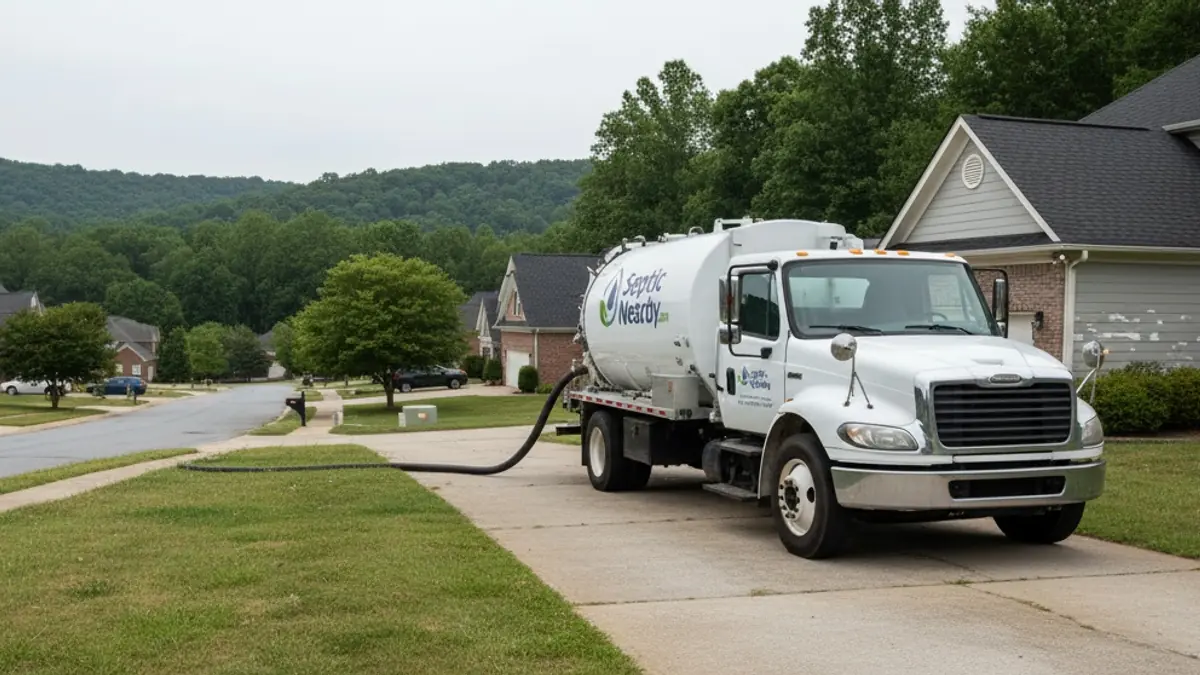 Photo Illustrative
Operators available 7 AM - 9 PM
Licensed & Insured • No Obligation • Emergency Service Available
Online request
Prefer not to call? Send the details and we will review the request before looking for available septic providers near your ZIP code.
Planning range for Georgia homeowners. Actual quotes vary by provider, route distance, tank size, lid access, disposal fees, and urgency. Ask whether the quote includes disposal, both compartments when present, and any digging.
Homeowners in Suwanee often search for septic pumping, emergency pump-out, tank cleaning, septic repair, and inspection help. The right provider depends on whether this is routine maintenance, a backup, a full tank, or a problem that needs diagnosis before pumping.
Schedule a septic tank pump-out in Suwanee when the tank is full, slow drains are appearing, or routine maintenance is due.
If sewage is backing up or wastewater is surfacing, request urgent septic help and tell the provider whether the issue is inside the home or near the tank/drain field.
Ask whether the quoted price includes pumping, disposal, basic tank access, and whether digging or locating the lid costs extra.
If you are not sure pumping is the right fix, ask for an inspection or diagnostic visit before approving repair work.
Our local teams provide septic tank pumping and maintenance services throughout the Suwanee area, including the following ZIP codes:
Managing a septic system in Suwanee, GA, is less a chore and more a critical infrastructure project for your property. It requires a procurement mindset focused on vendor qualification, cost transparency, and long-term performance. The geology of Gwinnett County, dominated by Cecil series red clay loam, and our humid subtropical climate present unique challenges that demand more than just a cursory pump-out every few years. Your goal is to secure a reliable service agreement, not just hire a truck for an afternoon.
Your first step is issuing a de facto Request for Proposal (RFP) to a short list of qualified local vendors. While established names like Banks Septic (which absorbed OnSyte Septic Service) or specialists such as Green Septic Clean may come to mind, vendor qualification goes beyond brand recognition. Verify their state certification and confirm they carry adequate liability and workers' compensation insurance. Ask for references within your specific Suwanee neighborhood, whether it's a sprawling lot in The River Club or a tighter property in Old Town. A qualified vendor will inspect your site before providing a firm quote, assessing tank access, which can be a major cost variable in subdivisions built in the 90s and early 2000s.
Deconstruct any proposal you receive. A basic pumping service in the 30024 ZIP code is the baseline, but the final invoice is rarely that simple. Demand clear unit pricing for ancillary services. What is the cost per linear foot for extra hose if the truck can't get close to the tank? What is the hourly rate for locating and excavating lids buried under years of landscaping? These are the variables that inflate a low-ball estimate. Heavy rainfall can saturate the clay soil, making digging more difficult and time-consuming, a factor a professional vendor should account for. A transparent bid will itemize these potential charges, allowing for an apples-to-apples comparison and preventing costly surprises.
For anything beyond routine pumping, a formal service agreement is non-negotiable. This document is your primary risk mitigation tool. For a drain field repair or full system replacement, the agreement must detail the scope of work, materials to be used (specifying pipe type, gravel, etc.), project timeline, and a clear payment schedule tied to project milestones. It should explicitly state who is responsible for pulling permits from the Gwinnett Board of Health and scheduling inspections. For a major installation, a clause outlining how disputes will be resolved and defining the terms of the warranty is essential. This is your project's governing document; treat it with the seriousness it deserves.
The ultimate metric is a reliable, code-compliant system that functions flawlessly through heavy summer thunderstorms and dry autumns. Document every service call, creating a maintenance log. This data helps you track performance and predict future needs. Did the tank need pumping sooner than the recommended 3-5 year interval? This could indicate issues with household usage, hydraulic overload from storm runoff, or a drain field struggling to percolate in dense Georgia clay. A properly managed septic system is an asset. Poorly managed, it becomes a significant financial and environmental liability. Your diligence in selecting and managing your service provider directly impacts your property's value and safety.
Homeowner guides
Planning service? Buying a Georgia home with septic? Start with this inspection checklist, Check signs your septic tank may be full, what to do if septic backs up, how heavy rain affects septic systems, compare Georgia septic pumping cost factors, review septic tank pumping schedules, or run the full septic maintenance checklist.
The general guideline is every 3 to 5 years, but local Suwanee factors can change this. A large family in a four-bedroom home will need more frequent service than a retired couple. Gwinnett's dense clay soils can also reduce drain field efficiency over time, sometimes necessitating more frequent pumping to lessen the load on the leach field. The size of your tank is the final variable; a smaller, older tank will reach capacity faster.
The base price is determined by your tank's size (e.g., 1000, 1250, or 1500 gallons). However, significant cost drivers include: the depth of the tank lids (if they require extensive digging), accessibility for the truck (long hose runs add cost), the condition of the baffles, and whether it's a scheduled call or an emergency weekend service. Always clarify if digging to the lids is included in the base quote.
For routine tank pumping, no permit is required. However, for any repair, alteration, or full replacement of your septic system or drain field, a permit from the Gwinnett Board of Health is mandatory. Reputable contractors will handle the permitting process as part of their service.
Yes, absolutely. Suwanee's humid subtropical climate means heavy downpours are common. A saturated lawn can't support the weight of a heavy pumper truck, risking severe damage to your yard and, more importantly, the drain field itself. Most companies will reschedule non-emergency pumping if the ground is too wet to prevent property damage.
To ensure an efficient service call, clear a path to the septic tank area. Move any vehicles, trailers, or patio furniture that might obstruct the truck's access. Unlock any gates. If you know the location of your tank lids, mark them or clear the immediate area. Finally, for the safety of your pets and the technician, keep all dogs secured indoors or in a separate, fenced-off area.