
Septic tank pumping in Sylvester
Schedule a septic tank pump-out in Sylvester when the tank is full, slow drains are appearing, or routine maintenance is due.
By SepticNearby Editorial Team · Updated 2025-10-27
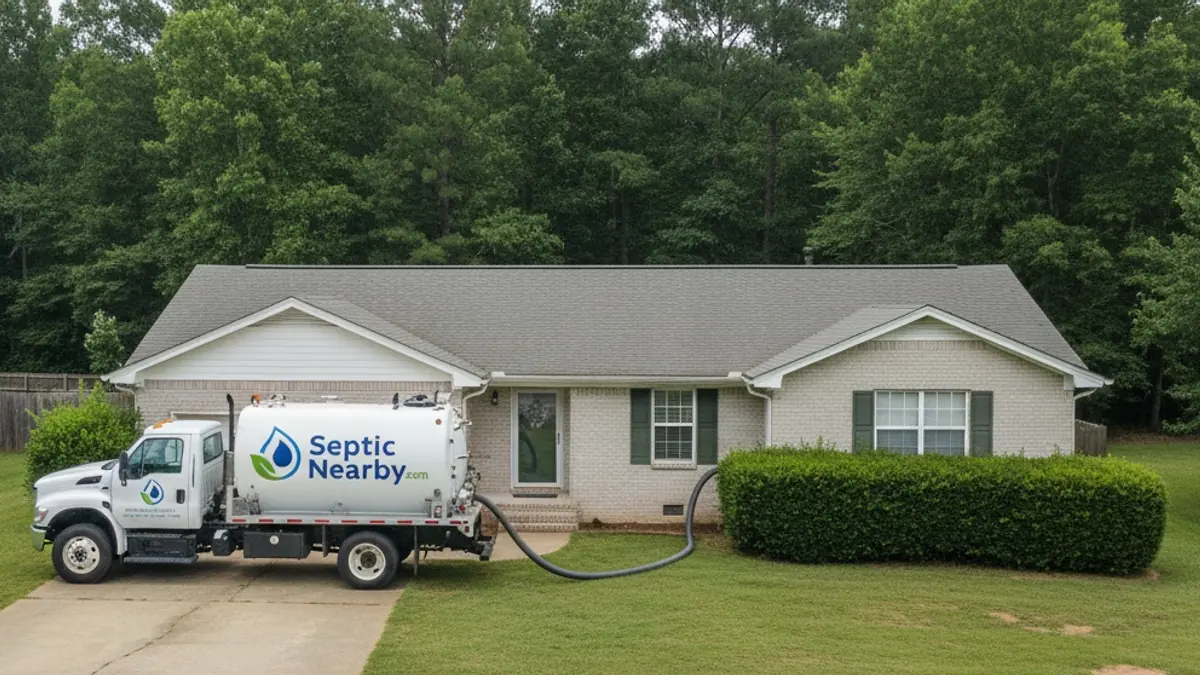 Photo Illustrative
Operators available 7 AM - 9 PM
Licensed & Insured • No Obligation • Emergency Service Available
Online request
Prefer not to call? Send the details and we will review the request before looking for available septic providers near your ZIP code.
Planning range for Georgia homeowners. Actual quotes vary by provider, route distance, tank size, lid access, disposal fees, and urgency. Ask whether the quote includes disposal, both compartments when present, and any digging.
Homeowners in Sylvester often search for septic pumping, emergency pump-out, tank cleaning, septic repair, and inspection help. The right provider depends on whether this is routine maintenance, a backup, a full tank, or a problem that needs diagnosis before pumping.
Schedule a septic tank pump-out in Sylvester when the tank is full, slow drains are appearing, or routine maintenance is due.
If sewage is backing up or wastewater is surfacing, request urgent septic help and tell the provider whether the issue is inside the home or near the tank/drain field.
Ask whether the quoted price includes pumping, disposal, basic tank access, and whether digging or locating the lid costs extra.
If you are not sure pumping is the right fix, ask for an inspection or diagnostic visit before approving repair work.
Our local teams provide septic tank pumping and maintenance services throughout the Sylvester area, including the following ZIP codes:
For residents of Sylvester, Georgia, and much of Worth County, the proper functioning of an on-site sewage management system—commonly known as a septic system—is a critical piece of household infrastructure. Unlike centralized municipal sewer, these systems place the responsibility of wastewater treatment directly on the property owner. Understanding their design, limitations, and maintenance requirements is essential for protecting both your investment and our local groundwater.
Our region, situated on the Dougherty Plain, is characterized by soils like the Tifton and Fuquay series—typically a sandy loam topsoil over a clay loam subsoil. While the surface soils often exhibit a favorable percolation rate (or 'perc rate'), the underlying clay can impede drainage, especially during periods of high rainfall. This geological reality dictates the engineering of local septic systems. The system's capacity to handle daily wastewater, known as its design flow, is calculated based on the number of bedrooms in a home, not the number of occupants. This ensures the system can manage peak hydraulic loading without overwhelming the drain field.
A conventional septic system here consists of a septic tank, a distribution box, and a drain field (or leach field). The tank separates solids and scum from liquid effluent. The distribution box is a critical, often overlooked, component that must be level to ensure effluent is evenly dispersed across all trenches of the drain field. Uneven distribution is a leading cause of premature field failure. Many properties in the 31791 area, particularly older ones, may have systems that predate modern standards. These can be undersized or lack the efficiency of contemporary designs.
When planning for a new installation or a system replacement, the Worth Board of Health mandates a site plan that includes not only the primary system but also a designated reserve area. This is an undeveloped portion of the lot, equal in size to the drain field, preserved for a future replacement system should the primary one fail. This foresight is crucial for the long-term viability of the property. Certified installers understand these local requirements and conduct thorough soil evaluations to determine the appropriate system type, whether it's a standard gravity-fed system or an alternative design needed for lots with poor soil or a high water table.
Sylvester's humid subtropical climate presents its own set of challenges. Heavy summer downpours can saturate the soil, temporarily reducing the drain field's ability to absorb and treat effluent. This is why homeowners may notice sluggish drains or slight odors after a significant rain event. It is also why performing major system work, like a drain field replacement, is often best scheduled for drier periods to avoid compacting saturated soil with heavy equipment. Proactive maintenance, performed by qualified local professionals such as Tillery Septic Service, LLC, is not just a suggestion; it is the most effective strategy for ensuring your system's longevity and performance under our specific regional conditions.
Homeowner guides
Planning service? Buying a Georgia home with septic? Start with this inspection checklist, Check signs your septic tank may be full, what to do if septic backs up, how heavy rain affects septic systems, compare Georgia septic pumping cost factors, review septic tank pumping schedules, or run the full septic maintenance checklist — and if a quote confuses pumping versus cleaning.
The general recommendation is every 3 to 5 years. However, this interval is specific to your household. A five-bedroom home with six occupants will require more frequent pumping than a two-bedroom home with one occupant. Heavy use of a garbage disposal also increases solid accumulation, shortening the service interval.
The primary factors are tank size (gallons), lid depth (requiring digging), and travel distance. Additional costs may apply for emergency or after-hours service, locating a hard-to-find tank, or clearing obstructions to access the lid. Costs are typically quoted as a base fee plus any necessary labor or mileage.
Routine maintenance like pumping your tank does not require a permit. However, any repair, modification, or full replacement of the septic system or drain field requires a permit issued by the Worth Board of Health to ensure the work meets state and local environmental health codes.
Yes. Pumping can be postponed if the ground is heavily saturated. A heavy pumper truck can cause significant damage to wet lawns and, more critically, can compact the soil over your drain field, reducing its effectiveness. It's a measure to protect your property.
Ensure the driveway is clear for the truck to access the site. Unlock any gates. If you know the location of your septic tank lids, clearing the area above them can save time and labor costs. For safety, please secure any pets before the technician arrives on your property.