
Septic tank pumping in Tunnel Hill
Schedule a septic tank pump-out in Tunnel Hill when the tank is full, slow drains are appearing, or routine maintenance is due.
By SepticNearby Editorial Team · Updated 2025-10-27
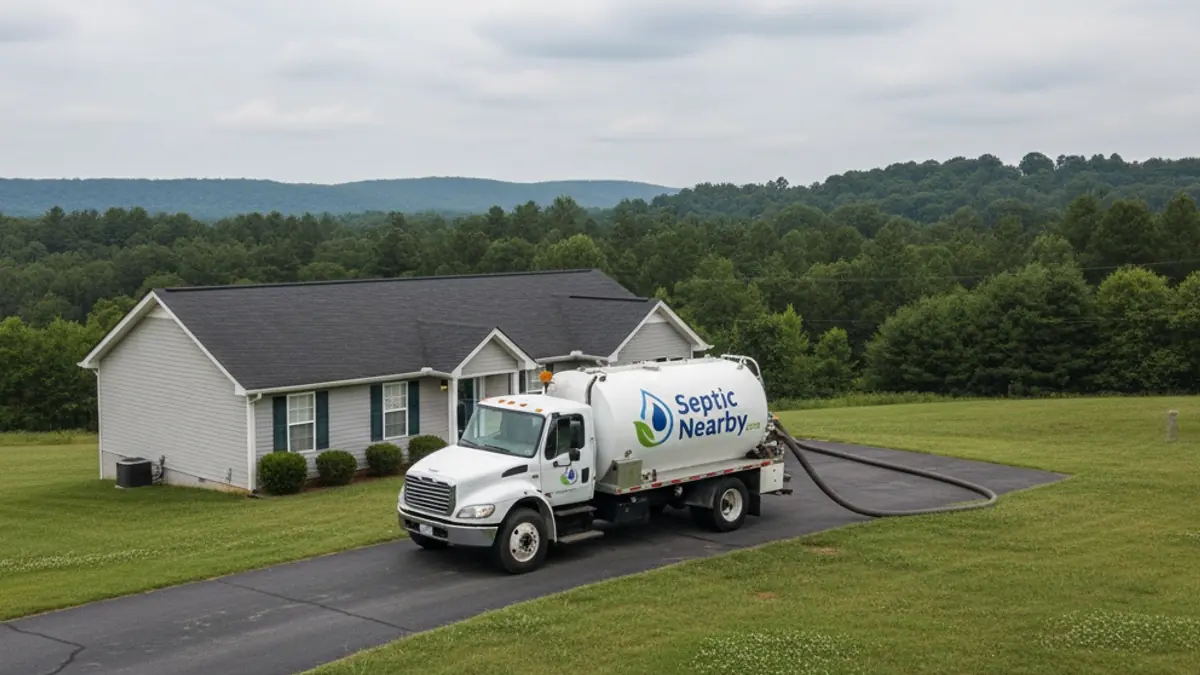 Photo Illustrative
Operators available 7 AM - 9 PM
Licensed & Insured • No Obligation • Emergency Service Available
Online request
Prefer not to call? Send the details and we will review the request before looking for available septic providers near your ZIP code.
Planning range for Georgia homeowners. Actual quotes vary by provider, route distance, tank size, lid access, disposal fees, and urgency. Ask whether the quote includes disposal, both compartments when present, and any digging.
Homeowners in Tunnel Hill often search for septic pumping, emergency pump-out, tank cleaning, septic repair, and inspection help. The right provider depends on whether this is routine maintenance, a backup, a full tank, or a problem that needs diagnosis before pumping.
Schedule a septic tank pump-out in Tunnel Hill when the tank is full, slow drains are appearing, or routine maintenance is due.
If sewage is backing up or wastewater is surfacing, request urgent septic help and tell the provider whether the issue is inside the home or near the tank/drain field.
Ask whether the quoted price includes pumping, disposal, basic tank access, and whether digging or locating the lid costs extra.
If you are not sure pumping is the right fix, ask for an inspection or diagnostic visit before approving repair work.
Our local teams provide septic tank pumping and maintenance services throughout the Tunnel Hill area, including the following ZIP codes:
Executing a septic project in Tunnel Hill, Georgia, isn't just about digging a hole. It's a logistical operation dictated by our specific North Georgia terrain, our humid subtropical climate, and the regulations set by the Whitfield Board of Health. Whether you're on a newer lot in a planned subdivision or managing an older property off Taylor's Ridge, the principles of site management apply: plan the work, then work the plan.
The ground itself is your primary variable. Much of the soil profile in the 30755 area is a heavy clay loam. This isn't loose sand; it's dense, holds water, and requires specific handling. Improper excavation or backfill can lead to over-compaction, which suffocates a drain field and causes premature system failure. During our wet seasons, this soil becomes saturated, turning a potential work site into a mud pit that can't support heavy equipment. Any timeline must account for rain delays.
Before any equipment rolls onto your property, a clear plan for access and staging is critical. A standard pumper truck weighs over 15 tons. Your driveway must be clear of vehicles, low-hanging branches, and any other obstructions. For a new installation or major repair requiring an excavator, we establish a designated staging area for materials, spoils (excavated dirt), and equipment. This minimizes unnecessary traffic across your lawn, protecting it from compaction. We need to identify the precise location of the tank and drain field, as well as any underground utilities, before a single shovel breaks ground. A simple pumping job from a company like Same Day Septic requires less prep, but clear access is still non-negotiable.
The job dictates the machinery. A routine tank pump-out requires a vacuum truck and several hundred feet of hose. A full system replacement involves excavators, backhoes, and trucks for hauling gravel and fill. Vertical and horizontal clearance is a major safety checkpoint. We measure distances from power lines, the house foundation, property lines, and wells. The Whitfield Board of Health has specific setback requirements that are rigorously enforced. Driving heavy equipment over an existing drain field is strictly prohibited—the weight will crush the perforated pipes and compact the soil, leading to immediate failure.
An active septic project is a construction site. We establish a clear safety perimeter to keep family, pets, and visitors away from open excavations and heavy machinery. For any excavation deeper than four feet, OSHA regulations may require shoring or sloping the trench walls to prevent collapse. This isn't just best practice; it's a federal requirement. All tank lids must be secured immediately after service to prevent a serious fall hazard. From a compliance standpoint, any new installation or significant repair requires a permit and subsequent inspection from county health officials to ensure the system is built to code and poses no threat to groundwater.
Several factors impact the project timeline. A routine pump-out is a half-day affair. A drain field replacement can take several days, heavily dependent on weather. Obtaining the necessary permits from the health department can take weeks, and this must be factored into the schedule from day one. Soil percolation tests, required for new drain fields, also add time. These tests determine how quickly water drains through the soil, and in our clay-heavy region, finding a suitable location can be a challenge. Planning for these variables is the difference between a smooth operation and a costly, delayed mess.
Homeowner guides
Planning service? Buying a Georgia home with septic? Start with this inspection checklist, Check signs your septic tank may be full, what to do if septic backs up, how heavy rain affects septic systems, compare Georgia septic pumping cost factors, review septic tank pumping schedules, or run the full septic maintenance checklist.
The general guidance is every 3 to 5 years. However, local factors are critical. In Tunnel Hill, our clay loam soils don't absorb effluent as readily as sandy soils, putting more stress on the system. A family of five with a 1,000-gallon tank should plan for every 3 years. A two-person household with a 1,500-gallon tank might go 5 years. Using a garbage disposal increases solids and requires more frequent pumping.
The primary factors are tank size (e.g., 1,000 vs. 1,500 gallons), the depth of the lids (if they require significant digging to access), and ease of access for the truck. A long hose run or a difficult driveway can increase the time and labor involved. Travel distance to more rural parts of the county and emergency or after-hours service requests also impact the final cost.
For routine tank pumping, no permit is required as it's considered maintenance. For any repair, alteration, or new installation, a permit from the Whitfield Board of Health is absolutely mandatory. This process ensures the work meets local health and environmental codes.
Yes, and for good reason. Our humid subtropical climate means heavy rain can saturate the ground quickly. Driving a heavy pumper truck onto soft, wet ground can cause deep ruts and property damage, and the truck can get stuck. More importantly, operating heavy equipment over a saturated drain field can compact the soil and permanently damage the system's drainage capability. It becomes a safety and system preservation issue.
To ensure an efficient service call, please clear the driveway and the path to the septic tank. Unlock any gates. If you know the location of the tank lids, mark them. For safety, please secure all pets indoors and ensure children maintain a safe distance from the work area and equipment.