
Septic tank pumping in Woodstock
Schedule a septic tank pump-out in Woodstock when the tank is full, slow drains are appearing, or routine maintenance is due.
By SepticNearby Editorial Team · Updated 2025-09-13
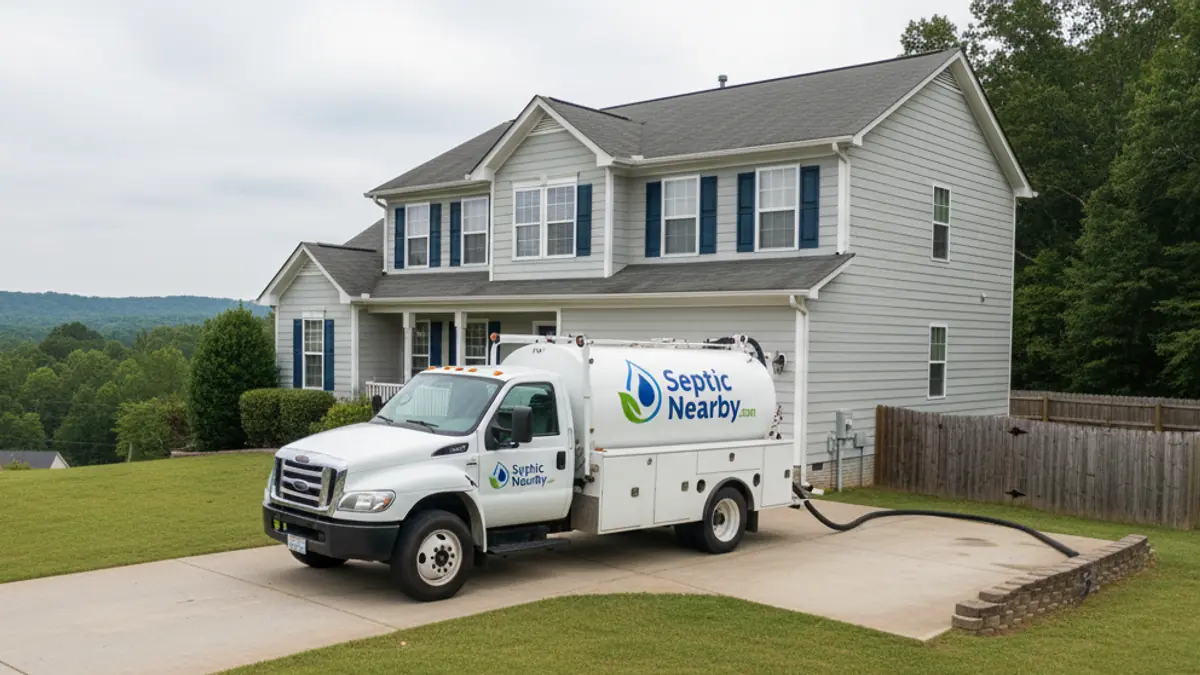 Photo Illustrative
Operators available 7 AM - 9 PM
Licensed & Insured • No Obligation • Emergency Service Available
Online request
Prefer not to call? Send the details and we will review the request before looking for available septic providers near your ZIP code.
Planning range for Georgia homeowners. Actual quotes vary by provider, route distance, tank size, lid access, disposal fees, and urgency. Ask whether the quote includes disposal, both compartments when present, and any digging.
Homeowners in Woodstock often search for septic pumping, emergency pump-out, tank cleaning, septic repair, and inspection help. The right provider depends on whether this is routine maintenance, a backup, a full tank, or a problem that needs diagnosis before pumping.
Schedule a septic tank pump-out in Woodstock when the tank is full, slow drains are appearing, or routine maintenance is due.
If sewage is backing up or wastewater is surfacing, request urgent septic help and tell the provider whether the issue is inside the home or near the tank/drain field.
Ask whether the quoted price includes pumping, disposal, basic tank access, and whether digging or locating the lid costs extra.
If you are not sure pumping is the right fix, ask for an inspection or diagnostic visit before approving repair work.
Our local teams provide septic tank pumping and maintenance services throughout the Woodstock area, including the following ZIP codes:
For homeowners in Woodstock, GA, managing an onsite wastewater treatment system is a non-negotiable aspect of responsible property ownership. The health of your family and the local water table depends directly on the functional integrity of your septic system. In our specific region of Cherokee County, characterized by a mix of residential growth in areas like 30188 and 30189 and more established rural properties, understanding the interplay between our humid subtropical climate and distinctive soil composition is critical.
The dominant soil series here, often a heavy red clay loam like the Cecil series, presents unique challenges. While stable, this soil has a slow percolation rate, which can strain a drainfield over time. During periods of heavy rainfall, a common occurrence in our climate, saturated clay can prevent proper effluent dispersal. This leads to hydraulic overload, backups, and premature system failure. An undersized or improperly maintained drainfield in these conditions quickly develops a restrictive 'biomat' layer, further impeding treatment efficiency and potentially leading to surface breakouts of untreated wastewater.
Effective system management isn't just about avoiding backups; it's a matter of public health. A failing septic system releases harmful pathogens and excess nutrients into the environment. Key water quality testing parameters measure this impact. Elevated levels of coliform bacteria are a direct indicator of fecal contamination, posing a risk to well water and nearby surface waters like Little River. Similarly, high nitrates can contaminate groundwater, a serious health concern, particularly for infants. Consistent monitoring of your system's effluent quality, including pH levels and suspended solids, provides a data-driven picture of its performance.
Many homes in older Woodstock neighborhoods were built with systems designed for smaller households and lower water usage. As families grow and appliance efficiency changes, these legacy systems are often pushed beyond their design capacity. Furthermore, access can be a significant constraint. Properties with steep grades, dense tree cover, or extensive hardscaping built over tanks and lids create logistical hurdles for maintenance. Experienced local technicians, like those at Richards Septic Tank Service Inc, are familiar with navigating these site-specific challenges unique to the Cherokee County landscape.
Proactive monitoring, not reactive repair, is the most effective strategy. This involves a scheduled assessment of the entire system—from the tank's scum and sludge layers to the drainfield's absorption capacity. Understanding these variables allows for a predictive maintenance schedule, protecting your investment and ensuring your system meets the standards set by the Cherokee Board of Health.
Homeowner guides
Planning service? Buying a Georgia home with septic? Start with this inspection checklist, Check signs your septic tank may be full, what to do if septic backs up, how heavy rain affects septic systems, compare Georgia septic pumping cost factors, review septic tank pumping schedules, or run the full septic maintenance checklist — and if a quote confuses pumping versus cleaning.
The general recommendation is every 3 to 5 years, but this is a baseline. For a larger household (5+ people) on a standard 1,000-gallon tank, you may need pumping every 2-3 years. Woodstock's prevalent clay loam soils can slow drainfield absorption, meaning a full tank can become problematic faster. Your specific usage, tank size, and whether you have a garbage disposal are the key data points for determining the correct frequency.
The primary factors are tank size (gallons) and the accessibility of the lids. If the lids are buried and require significant digging, the cost will increase. The distance from the truck's parking spot to the tank can also be a factor. Some companies may charge more for emergency or after-hours service. Always confirm what the base price includes before scheduling service.
For routine tank pumping and maintenance, a permit is not required. However, for any repairs, modifications, or a full system replacement, you absolutely need a permit from the Cherokee Board of Health's Environmental Health department. This ensures the work meets all state and local codes for public health and environmental safety.
Yes, and it frequently does. Our humid subtropical climate brings intense rainstorms that can quickly saturate the ground. Driving a heavy pumping truck over a soggy lawn can cause deep ruts and damage landscaping. More importantly, it can compact the soil over your drainfield, severely reducing its effectiveness and potentially causing long-term damage. Reputable companies will reschedule to protect your property.
To ensure an efficient service visit, clear a path for the truck and hoses from the driveway to the tank area. Unlock any gates. If you know the location of your septic tank lids, mark them or uncover them if they are just below the surface. Finally, for the safety of your pets and the technician, please secure all dogs and other animals indoors or in a separate, contained area.