
Emergency Septic Pumping in Georgia: When to Call
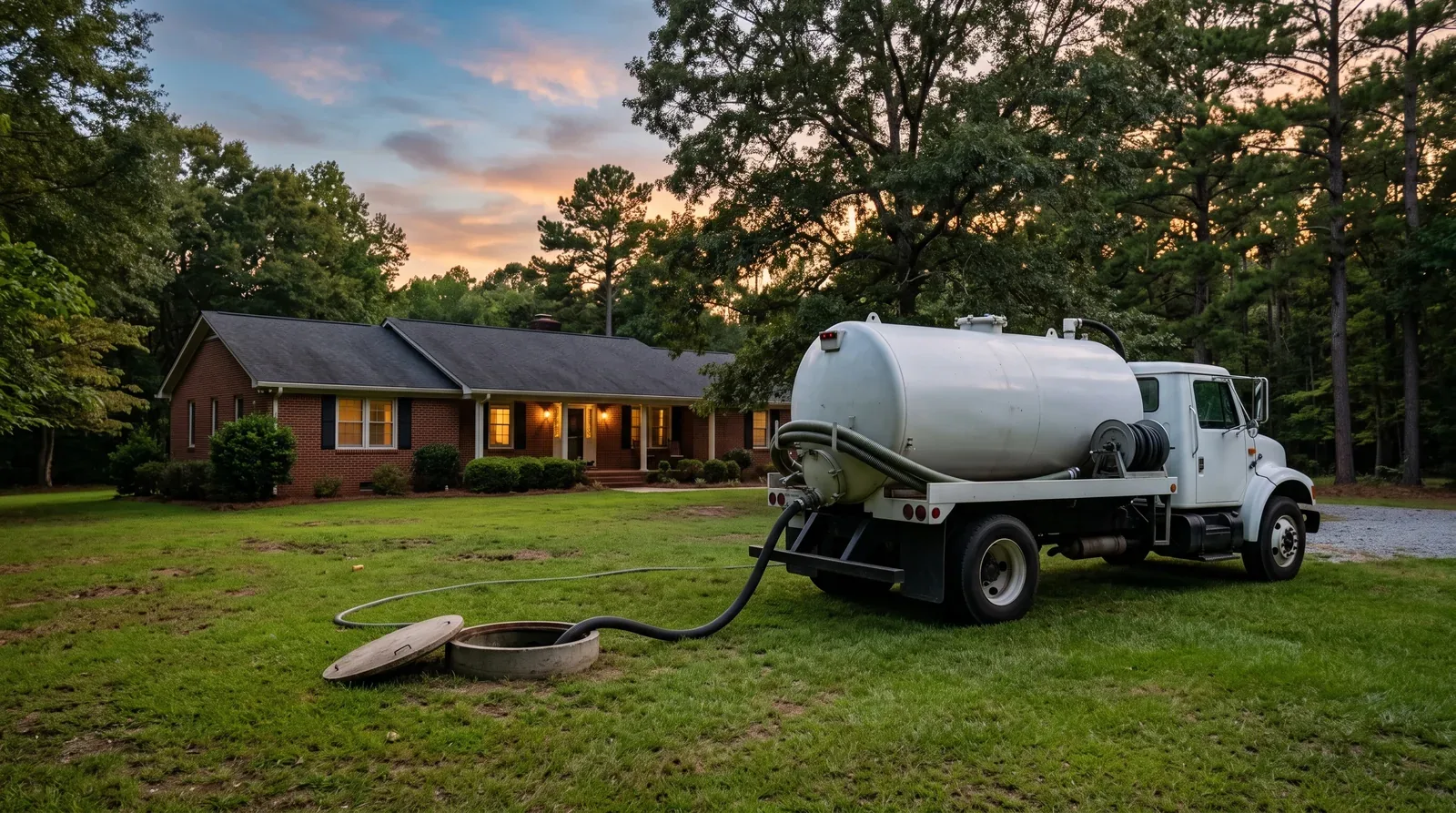
Septic problems rarely start at a convenient time. A toilet backs up on a holiday weekend, an alarm sounds late at night, or a wet, foul-smelling patch appears in the yard after days of storms. When that happens, Georgia homeowners need to answer one question quickly: does this call for emergency septic pumping right now, or can it wait for a same-day or scheduled appointment? If sewage is already inside your home or no drain in the house will empty, stop all water use now, including flushing toilets, and keep people and pets away from the wastewater. Then come back to this guide. The decision matters for three practical reasons. Raw sewage carries a real contamination risk for people and pets. Wastewater that sits indoors damages flooring, drywall, and belongings the longer it stays. And the details you give when you call help the provider send the right truck and equipment on the first trip. This guide is not a substitute for an on-site evaluation. Tank size, drain field condition, soil, slope, and how the system was installed all affect what is happening underground, and only a qualified septic professional who sees your property can diagnose the cause. What this guide can do is help you decide how urgently to act and what to say when you call. It starts with the symptoms that usually justify an immediate emergency septic service call and those that typically fit same-day or next-available service. A decision table then sorts common situations into emergency, same-day, and scheduled tiers, with the action to take for each. A dispatcher checklist and safe steps for the wait follow. The guide also explains when emergency septic tank pumping will not solve the problem. After heavy rain or flooding, a saturated drain field can make a freshly pumped system back up again, and an inspection may matter more than another pump-out. To keep this page focused on the decision, it links to our detailed articles on backup cleanup, the signs of a full tank, heavy rain and septic systems, and pumping costs in Georgia rather than repeating them. If you already know you need help, skip ahead to the section on finding a local Georgia provider through our directory.
Need septic help now?
Call SepticNearby and we will connect you with available Georgia septic providers, or enter your ZIP code to see who serves your area.
Call now: symptoms that justify an emergency
Call for emergency service if any of these apply. Sewage inside the home: wastewater coming up through a floor drain, shower, tub, or toilet. Raw sewage is a health hazard, and the damage spreads the longer it sits. No drains working anywhere in the house: toilets, sinks, and showers all back up or will not empty. One slow sink usually points to a local clog, but when every fixture is affected, the problem is more likely at the tank, the main line, or beyond. Sewage surfacing in the yard, especially where children or pets play, near a well, or beside a walkway. Standing wastewater outdoors is a direct exposure hazard. A septic alarm that will not stop. Systems with pumps or advanced treatment units often have a high-water or malfunction alarm. If it keeps sounding after you have stopped using water, the pump or float may have failed and the tank may be close to overflowing. In any of these cases, stop all water use, including flushing toilets, keep people and pets away from the affected area, and call.
Symptoms that can usually wait for same-day or next-available service
Some symptoms need prompt attention but usually do not require an after-hours response: gurgling in drains or toilets; several slow drains that still empty eventually; sewage odors near the tank or drain field with no visible wastewater; unusually green or soggy grass over the drain field; and an alarm that sounds briefly, then clears once you cut back on water. For these, booking same day septic pumping or the next available appointment is usually reasonable, as long as you reduce water use and watch for changes. If a symptom gets worse, for example a slow drain turns into a backup, treat it as an emergency: stop all water use, including flushing, and call. For a fuller list of early warning signs, see our guide to the signs that a septic tank is full.
Find septic service near you: enter your Georgia ZIP code.
Emergency, same-day, or scheduled: decision table
Use this table as a starting point, not a diagnosis. Tier | Typical symptoms | Action --- | --- | --- Emergency: call now | Sewage inside the home; no drains working anywhere in the house; sewage surfacing where people or pets can be exposed; an alarm that keeps sounding after water use stops | Stop all water use, including flushing; keep everyone clear of wastewater; call immediately Same-day or next-available | Gurgling drains; several slow fixtures that still drain; persistent odors without visible sewage; soggy spots over the drain field; an alarm that clears once water use is reduced | Cut back sharply on water use; call during business hours; move to the emergency row if symptoms worsen Scheduled appointment | No current symptoms; due or overdue for routine pumping based on your provider's advice; buying or selling a home; a check-up after heavy rain once the system works normally again | Book a routine visit Response times and availability vary by provider and location, so ask each company what it can offer.
What to tell the dispatcher
Clear details help the provider send the right truck, hoses, and equipment the first time. Be ready to share: What you are seeing and where, such as sewage at a basement floor drain or a wet area near the tank. When it started and whether it is getting worse. Where the tank is and whether the lids are buried, at ground level, or on risers, if you know. How far the tank is from where a truck can park, including gates, fences, steep slopes, or soft ground. The date of the last pumping, if you know it. Whether the system has a pump, alarm, or advanced treatment unit. Whether there has been recent heavy rain or flooding. Keep any site plan or past service record within reach. If you do not know a detail, say so; that is more useful than a guess.
What to do while you wait
Your goals are to keep the problem from growing and to avoid contact with wastewater. In an emergency, with sewage backing up, no drains working, sewage surfacing, or an alarm that will not stop: stop all water use, including flushing toilets, until the system has been serviced. Use facilities away from the home if you can. With a non-emergency warning sign only, such as gurgling or slow drains: cut back sharply on water use. Hold off on laundry, the dishwasher, and long showers, and flush as little as possible. In every case, do not open the tank lids, and never enter a septic tank or lean into an opening. Tanks can hold dangerous gases and are a fall hazard. Keep children and pets away from wastewater indoors and outdoors, and wash your hands thoroughly after any unavoidable contact. If there is water near an electric pump or its controls, do not touch them. For indoor cleanup, follow our step-by-step guide on what to do when a septic system backs up.
When pumping alone will not fix it
Pumping empties the tank, but it cannot fix a drain field that will not accept water. After heavy rain, long stretches of storms, or flooding, the soil around the drain field can become saturated. Wastewater leaving the tank then has nowhere to go, and the system can back up even if the tank was just pumped. EPA guidance on septic systems after floods generally advises against pumping while the drain field is flooded or saturated. A drain field that is failing for other reasons, such as age, root intrusion, compacted soil, or overloading, can show the same symptoms. If your system backs up again soon after a pump-out, or the trouble started during wet weather, ask the provider to inspect the drain field rather than simply pumping again. How long recovery takes depends on your soil, weather, and system, so a professional assessment is the safest guide. Our article on whether heavy rain can cause septic problems covers this in more detail. For general flood preparedness and recovery information, see Ready.gov, a FEMA website.
Cost: why emergency calls may be priced differently
This article does not list prices, because cost depends on the provider, your location, tank size, access, and the time of the call. Emergency and after-hours calls may be priced differently from routine weekday service, and extra work such as locating or uncovering buried lids can add to the total. Ask about pricing before work begins. For what drives pumping costs in the state, see our guide to septic tank pumping cost in Georgia.
Finding a local Georgia provider
Search results for emergency septic pumping near me can be hard to compare under stress. Our provider directory lists septic companies serving Georgia so you can find local options quickly. Some companies may offer after-hours or 24/7 septic service and others may not, so confirm with each one whether it takes emergency calls, how soon it can arrive, and how it prices the visit. Saving a provider's number before you need it is one of the simplest ways to be prepared.
Get it handled
Talk to a local provider today, find septic companies by ZIP code, or look up the permit and tank-size records for your property before you call.
Frequently asked questions
Can I use toilets before the truck arrives?
Not if sewage is backing up, no drains are working, sewage is surfacing, or the alarm keeps sounding. In those situations, stop all water use, including flushing, and use facilities away from the home until the system has been serviced. Limited use, with flushing kept to a minimum, is reasonable only for non-emergency warning signs such as gurgling or slow drains.
Is a gurgling drain an emergency?
Usually not on its own. Gurgling often means water is not draining freely, which can be an early sign of a full tank, a blocked line, or a drain field problem. It generally fits same-day or next-available service. If sewage starts coming up or no drains work, treat it as an emergency and stop all water use, including flushing.
Should I pump my septic tank after a storm?
Not automatically. If heavy rain or flooding has saturated the drain field, pumping may give only temporary relief and is generally not recommended until the ground drains. Cut back on water use and contact a professional, who can judge whether pumping, an inspection, or waiting is the right step.
What is the difference between emergency and same-day septic service?
An emergency call is for an immediate health risk or a home you cannot use, such as sewage inside or surfacing where people are exposed. Same-day service is for warning signs that need prompt attention but are not yet causing exposure. Companies define and price these differently, so ask what each option means when you call.
Should I open the septic tank lid to check the level?
No. Septic tanks can contain hazardous gases and are a fall risk. Leave the lids closed and let a trained professional open and inspect the tank. You can help by telling the dispatcher where you think the tank and lids are.
Does every septic company offer 24/7 service?
No. Availability varies by company and location. Whether you find a provider through a directory or a search, ask directly whether it takes after-hours emergency calls and how those calls are handled.