
How to Find Your Septic Tank in Georgia
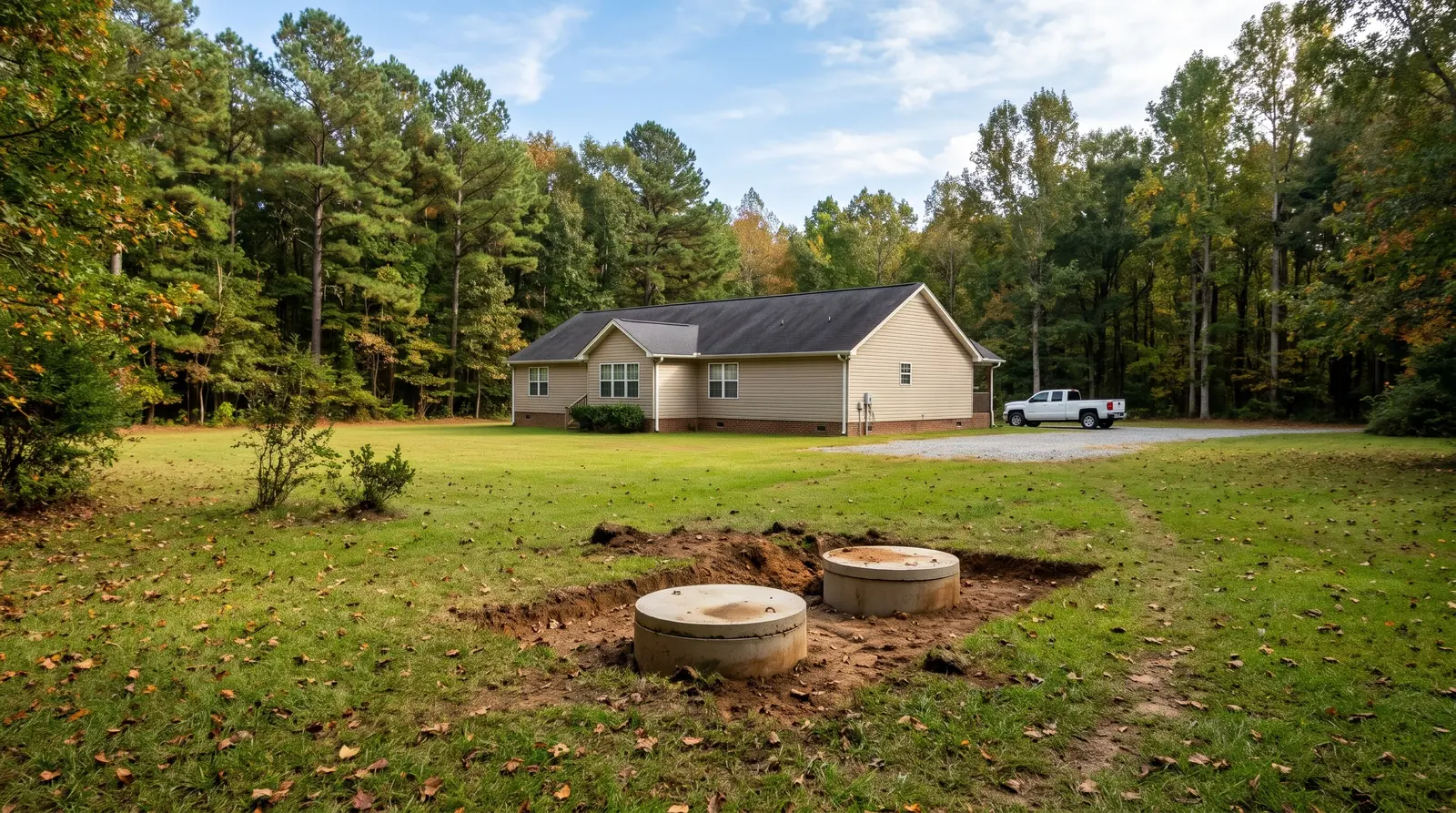
If you are about to book septic tank pumping, preparing to sell, or just trying to understand what is under your yard, start with two questions: does my house have a septic tank, and if so, where is it? Many Georgia homes outside city sewer service use an onsite wastewater system, and it is common for owners to move in without a site drawing, a copy of the permit, or any idea where the lids are. That gap is fixable. This guide works through it in order, from free checks you can do at home to the point where it makes sense to call a septic tank locator service or a local septic provider. Work the way a permit office would: paperwork first, then the yard. Records show what was approved and sometimes where it was drawn. The yard shows what is actually there. Neither is complete on its own. Older systems may predate current recordkeeping, a system may have been repaired or replaced without an updated drawing, and a sketch on file may not be to scale. You are not looking for one perfect document. You are collecting enough clues that the person who comes to pump or inspect can go straight to the tank instead of probing the whole yard. In Georgia, septic permits and records are generally kept at the county level by environmental health offices that work under the county Board of Health, with statewide oversight from the Georgia Department of Public Health. What is on file, how far back it goes, and how you request it depend on the county. Some offices may be able to search by address; others may ask for a parcel number or owner name; and some properties have no record at all. A missing record does not mean something is wrong with the system. It means the physical search carries more weight. Finding the tank once pays off for years. Future pumping goes faster, inspections are simpler, and you can keep vehicles, sheds, patios, and new plantings off the tank and drain field. The sections below cover how to confirm septic versus sewer, which records to request, what to look for outside, what a locator typically does, how to stay safe, and what to tell a provider when you call.
Need septic help now?
Call SepticNearby and we will connect you with available Georgia septic providers, or enter your ZIP code to see who serves your area.
Step 1: Confirm whether the home is on septic or public sewer
Start with your bills. If your water or utility bill includes a sewer or wastewater charge, the home is likely connected to public sewer. If you are on a private well, or your water bill shows no sewer charge, septic is more likely. Treat that as a clue, not proof, because billing arrangements differ between utilities. Next, check property documents: a past home inspection report, seller disclosures, closing paperwork, or an earlier septic inspection may mention the system. Ask the seller, previous owner, or long-time neighbors whether the tank was ever pumped and by whom. A past pumping company may still have notes on the location. If you are still unsure, call your local water or sewer utility and ask whether your address is a sewer customer.
Step 2: Request septic records from county environmental health
Once you suspect septic, contact your county environmental health office and ask what is on file for the property. Ask specifically about the original septic permit, any repair permit, and any as-built drawing or inspection record showing where the tank and drain field were placed. Have the street address, parcel number, current and previous owner names, and the approximate year the home was built ready, since offices search records differently. Availability and format vary by county: records may be on paper, scanned, or in a database, and older homes may have little or nothing on file. If you receive a record, check whether it covers a later repair or a replacement, because a drawing of the original system may no longer match what is in the ground. Ask the office how to submit a request rather than assuming an online septic records lookup exists for your county.
Find septic service near you: enter your Georgia ZIP code.
Step 3: Look for physical clues around the house and yard
If records are thin, the house itself is your best guide. Find where the main sewer line leaves the foundation, which is often visible in a basement or crawlspace. Note which side of the house it exits and which direction it runs, because the tank is usually somewhere along that path. Look for a cleanout, a capped pipe sticking up near the foundation or in the yard, which can also show the line's route. Walk that side of the yard looking for lids, risers, or concrete or plastic covers at or just below grade. Grass and soil patterns can help: a rectangle of grass that grows differently, a slight depression or mound, or a strip that stays greener or browner than the rest of the lawn may point to a tank or drain lines. These signs are not reliable on every property, so treat them as places to check, not conclusions. Avoid digging or probing hard into the soil yourself, since buried pipes, lines, and lids can be damaged. If you do plan to dig, contact Georgia 811 first so buried utilities can be marked.
What a septic tank locator service typically does
A septic tank locator service or septic provider usually starts with the same clues you gathered: county records, where the sewer line exits, and any cleanouts. From there, they commonly trace the line from the house toward the tank, probe the soil to find the tank's edges, and dig carefully to expose the lid or lids. Many will mark the spot or sketch it for your records, and some may suggest adding risers so the lids are easier to reach next time. Methods differ between companies, so ask how they plan to find your tank and whether locating is a separate service or included in a pumping or inspection visit.
Why the tank location matters
A known location makes septic tank pumping faster and less disruptive, because the crew is not searching your yard. It also matters for inspections, whether you are checking the system before pumping or before buying a home; see our guides on septic tank inspection before pumping (/resources/septic-tank-inspection-before-pumping) and septic inspection before buying in Georgia (/resources/septic-inspection-before-buying-georgia). Knowing where the tank and drain field sit also helps you protect them. Do not park vehicles, build sheds or patios, or run heavy equipment over the system, and ask a professional before planting trees nearby. Once you find it, record the location with photos and measurements from fixed points such as house corners, and keep that with your pumping records so you can plan a schedule (/resources/how-often-pump-septic-tank).
Safety, and when to stop searching
Looking for a tank is a reasonable homeowner task; opening or entering one is not. Gases inside septic tanks can be dangerous, and old or damaged lids can give way. Do not open a tank alone, never lean into or enter one, and keep children and pets away from any exposed lid until it is properly secured. If you have checked your bills, requested county records, and followed the sewer line without finding the tank, call a local provider. Call sooner if you notice wet spots, odors, or sewage backups, which may need prompt attention. When you call, give your address, whether you are on well or city water, any records you received, where the sewer line exits the house, cleanout locations, the date of the last pumping if known, and any symptoms. You can find local septic professionals at /providers.
Get it handled
Talk to a local provider today, find septic companies by ZIP code, or look up the permit and tank-size records for your property before you call.
Frequently asked questions
Does my house have a septic tank?
Check your utility bill for a sewer charge, review inspection reports or disclosures, and ask the previous owner. If there is no sewer charge, and especially if you have a well, septic is more likely. Your county environmental health office or local sewer utility can help confirm.
Can I look up septic records in Georgia by address?
Sometimes. Septic records are typically kept by county environmental health offices, and search options vary. Some may search by address, while others need a parcel number or owner name. Contact your county office to ask how they handle requests.
What if the county has no septic records for my home?
That can happen, especially with older systems. Rely on physical clues such as where the sewer line leaves the house and any cleanouts, or hire a septic tank locator service or local septic provider to find the tank.
Is it safe to open my septic tank lid myself?
It is safer not to. Septic tanks can contain hazardous gases, and lids can be heavy or deteriorated. Leave opening, inspecting, and pumping to a qualified provider, and keep children and pets away from any uncovered lid.
Do I need to find the tank before septic tank pumping?
It helps but is not always required. Many providers can locate the tank during the visit; ask when you book. Sharing records and clues in advance can save time, and a known location makes future pumping easier.
Should I add risers once the tank is found?
Risers can make the lids easier to reach for future pumping and inspection. Whether they suit your system depends on the tank and site, so ask your provider, and check with your county environmental health office about any permit questions.