
Septic tank pumping in North Metro
Schedule a septic tank pump-out in North Metro when the tank is full, slow drains are appearing, or routine maintenance is due.
By SepticNearby Editorial Team · Updated 2025-09-21
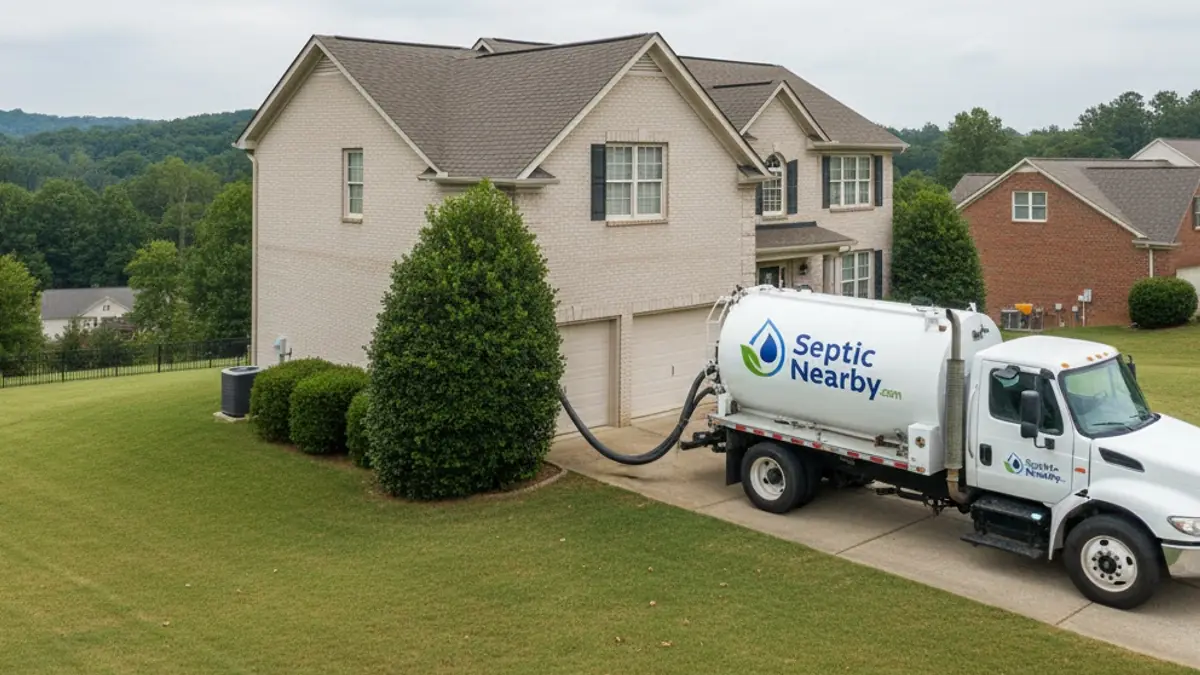 Photo Illustrative
Operators available 7 AM - 9 PM
Licensed & Insured • No Obligation • Emergency Service Available
Online request
Prefer not to call? Send the details and we will review the request before looking for available septic providers near your ZIP code.
Planning range for Georgia homeowners. Actual quotes vary by provider, route distance, tank size, lid access, disposal fees, and urgency. Ask whether the quote includes disposal, both compartments when present, and any digging.
Homeowners in North Metro often search for septic pumping, emergency pump-out, tank cleaning, septic repair, and inspection help. The right provider depends on whether this is routine maintenance, a backup, a full tank, or a problem that needs diagnosis before pumping.
Schedule a septic tank pump-out in North Metro when the tank is full, slow drains are appearing, or routine maintenance is due.
If sewage is backing up or wastewater is surfacing, request urgent septic help and tell the provider whether the issue is inside the home or near the tank/drain field.
Ask whether the quoted price includes pumping, disposal, basic tank access, and whether digging or locating the lid costs extra.
If you are not sure pumping is the right fix, ask for an inspection or diagnostic visit before approving repair work.
Our local teams provide septic tank pumping and maintenance services throughout the North Metro area, including the following ZIP codes:
Operating a home in North Metro, GA, means managing unseen infrastructure. For thousands of us in Gwinnett County, particularly in areas with varied housing stock like the 30026 and 30029 ZIP codes, that infrastructure includes an on-site sewage facility—your septic system. This isn't just a buried tank; it's a worksite with inherent risks that demand a safety-first, prevention-focused mindset. Viewing your system through the lens of a safety coordinator reveals potential hazards that, if left unaddressed, can lead to costly failures, property damage, and serious health risks.
The primary operational hazard for any septic system in our region is environmental saturation. North Metro's humid subtropical climate delivers significant annual rainfall, which interacts poorly with our dominant soil profile: dense red clay loam. Unlike sandy soils that percolate quickly, clay holds water. When your drain field becomes saturated from heavy rains, it loses its ability to accept and process effluent from the septic tank. This is the number one cause of system backups and premature failures in Gwinnett.
A failed system is more than an inconvenience; it's a designated biohazard. Raw sewage can surface in your yard or back up into your home, exposing your family to pathogens like E. coli and Salmonella. Furthermore, the decomposition process within the tank produces toxic gases, primarily hydrogen sulfide. This is why a septic tank is classified as a confined space. Attempting to enter or even lean into an open tank without proper atmospheric monitoring and breathing apparatus can be fatal. The risk of structural collapse of older, deteriorating lids is another critical hazard that professionals are trained to identify.
Any professional septic service, whether it's a routine pump-out from a trusted local provider like Bynum Septic or a more complex repair, must begin with a site-specific Job Safety Analysis (JSA). This assessment identifies risks before work begins: Is the tank lid accessible? Are there overhead power lines? Is the ground stable enough to support a multi-ton pumper truck? This is not a DIY job. Homeowners lack the training and equipment to safely manage these risks.
For systems with electrical components like effluent pumps or alarms, strict lockout/tagout procedures are mandatory during service. This ensures the equipment cannot be accidentally energized while a technician is working, preventing severe injury. Reputable technicians will never enter a tank unless it's an absolute necessity for a repair, and even then, only with certified confined space entry protocols in place. These are not optional guidelines; they are industry-wide safety standards that protect both the technician and the homeowner.
Observe the crew that arrives at your home. Proper Personal Protective Equipment (PPE) is non-negotiable and a clear indicator of a company's commitment to safety. The minimum kit includes:
In certain situations, such as agitating a heavily compacted tank, respiratory protection may also be required. The presence of this gear confirms the crew understands and respects the biological and chemical hazards they are handling.
The most effective safety plan is one that prevents incidents before they occur. For your septic system, this means a proactive maintenance schedule. Slow drains, gurgling pipes, or foul odors near the drain field are not minor annoyances—they are a near miss. These are clear warning signals that your system is under stress and approaching a failure point. Heeding these warnings and scheduling a professional inspection can prevent a catastrophic backup.
Regular pumping is the cornerstone of prevention. It removes the accumulated solids that, if allowed to build up, will flow into and permanently clog your drain field. For us here in Gwinnett County, adhering to a conservative pumping schedule is the single best investment you can make in the safety, compliance, and longevity of your septic system. It's the difference between a controlled, scheduled maintenance task and an unsanitary, high-cost emergency response.
Homeowner guides
Planning service? Buying a Georgia home with septic? Start with this inspection checklist, Check signs your septic tank may be full, what to do if septic backs up, how heavy rain affects septic systems, compare Georgia septic pumping cost factors, review septic tank pumping schedules, or run the full septic maintenance checklist.
The general rule is every 3 to 5 years, but local factors in Gwinnett County demand a closer look. With our dense clay loam soils that drain slowly, a larger household (4+ people) or a home with a garbage disposal should lean towards a 2-to-3-year schedule to prevent solids from overloading the leach field.
Key variables include tank size (gallons), the depth of the lids (requiring more digging), accessibility for the truck (long hose runs can add cost), and the condition of the tank. Emergency or after-hours service will also cost more than a scheduled appointment. Expect a range, but a precise quote requires a site assessment.
For routine pumping, no permit is required. However, for any repairs, modifications, or a full system replacement, a permit from the Gwinnett County Board of Health is mandatory to ensure the work meets local environmental and safety codes.
Yes, and it's a critical safety measure. A heavy pumper truck can compact saturated soil, permanently damaging your lawn and, more importantly, the drain field beneath. Technicians will often reschedule if the access route is too wet to safely support the vehicle's weight and prevent site damage.
To ensure a safe and efficient service, please clear a path to the tank area, ensuring the truck has at least a 12-foot wide clearance. Unlock any gates. If you know the location of your septic tank lids, clearing grass or mulch off them is helpful. For everyone's safety, please secure all pets indoors before the technician arrives.